
At a glance
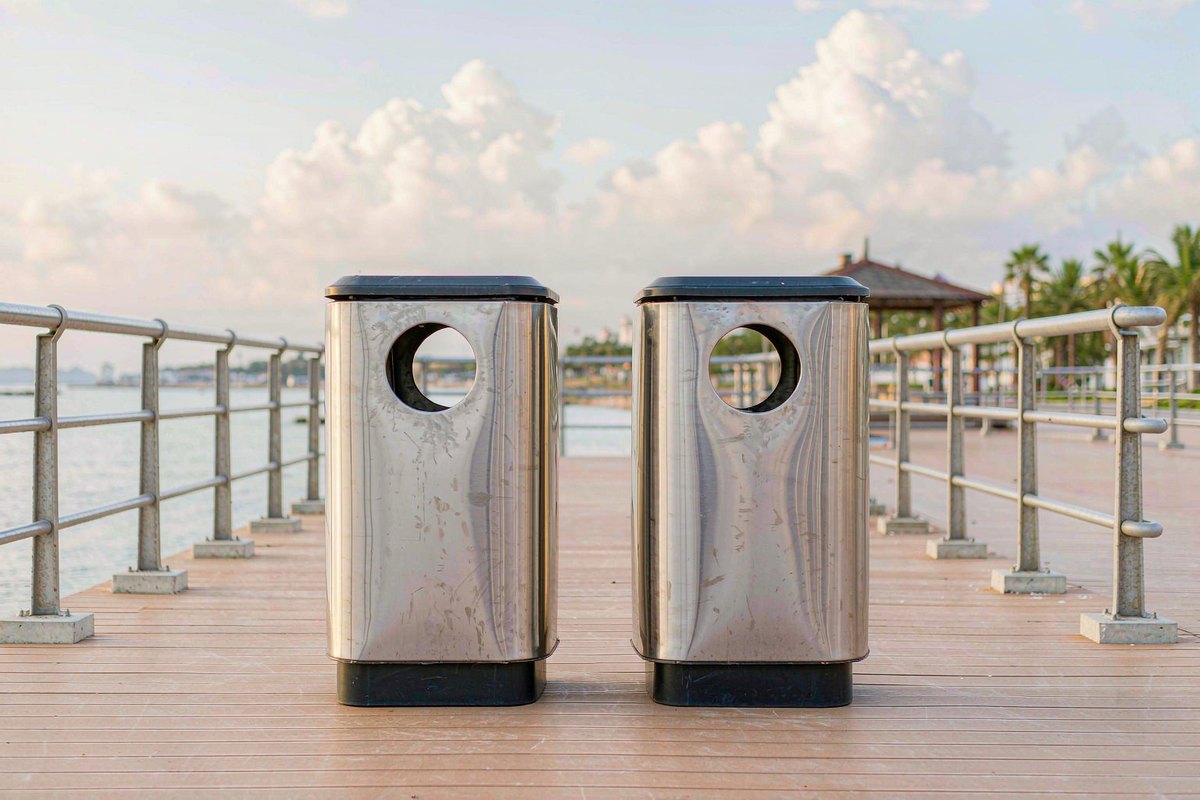
- 316 stainless steel handles salt spray far better than 304 in splash zones and open promenades.
- Hot-dip galvanized steel with an exterior powder coat is a dependable, budget-friendlier option away from direct spray.
- Drained bases and sealed, anti-theft fixings prevent the crevice corrosion that actually kills coastal bins.
- A monthly freshwater rinse in high-splash areas — quarterly elsewhere — keeps salt deposits from building up.
Which materials cope with salt air?
Salt does not attack materials the way impact or abrasion does. It works slowly: airborne chloride settles on surfaces, dissolves in morning dew and rain, and then keeps working whenever the surface stays damp. That is why a bin that looks fine in an inland plaza can develop tea-staining, pitting and flaking paint within its first humid season on a seafront.
Three material routes cover almost every coastal park brief. 304 stainless steel is the everyday grade used across public furniture; it performs well but can show surface staining in splash zones. 316 stainless steel adds molybdenum, which significantly improves resistance to pitting in chloride-rich environments — it is the usual choice for boardwalks, piers and anything within reach of wind-blown spray. Hot-dip galvanized steel with an exterior powder coat relies on a zinc layer plus a paint barrier; it is cost-effective for parks where bins sit on lawns and paths rather than open water fronts, as long as cut edges and welds are properly sealed.
| Material | Behaviour in salt air | Best suited to |
|---|---|---|
| 304 stainless steel | Good general resistance; may show surface staining in splash zones | Set-back lawns and paths in coastal parks |
| 316 stainless steel | Molybdenum-added grade with strong pitting resistance in marine air | Promenades, boardwalks and splash zones |
| Galvanized steel + exterior powder coat | Zinc plus paint barrier; edges and welds need sealing care | Seafront programmes with tighter budgets |
What should you check on fixings and drainage?
More coastal bins are retired because of their hardware than their body panels. Salt-rich moisture collects exactly where parts meet — under lid hinges, around anchor bolts, inside crevices at welds — and crevice corrosion does its work in oxygen-poor gaps that routine cleaning never reaches.
When comparing quotations for outdoor litter bins, check four details. First, ask for stainless fixings matched to the environment, not just to the body panel. Second, look for drained or ventilated bases so rainwater cannot pond inside the liner area. Third, request sealed welds on the body and lid assemblies. Fourth, if the site is publicly managed, specify anti-theft or tamper-resistant fixings so emptying crews can service bins but panels cannot be removed with a coin.
Where should bins be sited along a promenade?
Siting affects both corrosion and collection efficiency. Place bins where litter is actually generated — park entrances, food kiosks, playground edges, shade shelters and seating clusters — rather than at even intervals along the water. On windy seafronts, prefer heavier bodies or base-fixing details that keep units stable, and orient openings away from the prevailing wind so liners fill instead of littering the deck.
Smoking zones deserve their own furniture: a dedicated ash column beside benches and shelter entrances keeps cigarette butts out of general waste and out of the water, and it stops the butt-and-wrapper hotspots that make a clean promenade look neglected. For a broader view of how furniture packages come together in real public spaces, browse our project references.
How should coastal maintenance differ from inland sites?
The maintenance loop itself stays simple — the difference is salt removal. Salt deposits are hygroscopic: they pull moisture out of the air and keep surfaces damp long after rain, which is what turns coastal sites into corrosion accelerators. A freshwater rinse removes the deposits that rain alone cannot.
- Rinse bins in high-splash zones with fresh water about monthly; quarterly is enough for set-back areas.
- Wash stainless surfaces with mild detergent and a soft cloth; never use abrasive pads or chloride-based cleaners.
- Inspect powder-coated units after storms and touch up coating chips promptly before moisture gets underneath.
- Check fixings and liner condition during every emptying cycle; seize-up usually announces itself at hinges first.
The same humid-climate logic applies to the seating side of a coastal park: timber slats need their own care routine, which we cover step by step in our guide to maintaining Merbau bench slats in humid climates.
Frequently asked questions
- What is the best material for outdoor litter bins near the sea?
- For splash zones and open promenades, 316 stainless steel is the usual specification because its molybdenum content resists pitting in salt-laden air. On set-back lawns and paths away from direct spray, hot-dip galvanized steel with a well-applied exterior powder coat is a dependable, more economical choice.
- How often should coastal park bins be cleaned?
- In high-splash zones, plan a freshwater rinse about once a month to remove salt deposits, and once a quarter for bins set further back. Use a mild detergent and a soft cloth; avoid abrasive pads and chloride-based cleaners on stainless surfaces.
- Is powder-coated steel suitable for beachfront promenades?
- Yes, provided the substrate is hot-dip galvanized and the coating is specified for exterior use. Pay attention to cut edges, welds and fixing points, inspect chips after storms, and touch up promptly so moisture cannot work underneath the coating.
Planning a coastal or seafront programme? Send us the site plan, expected daily footfall and finish requirements.
Get a quote