
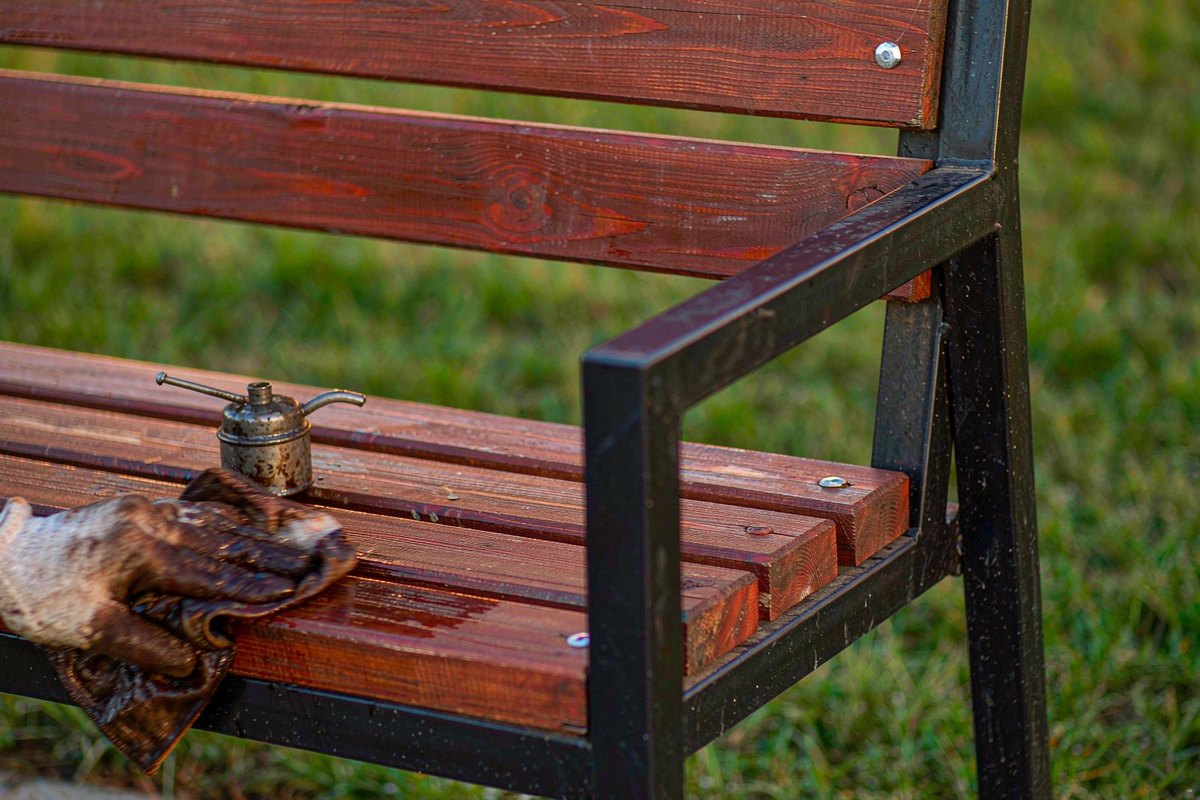
At a glance
- Greying and raised grain are surface symptoms of UV plus moisture — catch them early and sanding stays light.
- Plan one light sand and re-coat every 6–12 months; time the main one for just before the wet season.
- Penetrating oils are the easiest to renew on dense Merbau; film finishes need abrasion before recoating.
- Modular slat fixing means a damaged slat is a 15-minute swap, not a bench replacement.
Why do bench slats deteriorate faster in humid climates?
Merbau (also sold as kwila) is a dense tropical hardwood with natural extractives that give it good inherent durability — that is precisely why it is so common on park benches and seating. What humid climates change is the number of wet-dry cycles the surface goes through. Slats soaked by afternoon rain and baked dry by morning sun expand and contract daily, which lifts the grain, opens surface checks and pushes finishes off the wood long before the timber itself is compromised.
Three symptoms dominate inspection reports from humid regions. Greying is UV photo-degrading the top layer of fibres — cosmetic at first. Raised grain and splinters follow as those weakened fibres lift. And on benches finished with film-forming coatings, moisture gets under the film and peels it in patches, which then traps dirt and water against bare wood. None of these mean the slat is finished; they mean the protective layer is.
How often should Merbau slats be sanded and re-oiled?
For public benches in humid subtropical or tropical areas, a light maintenance pass every 6 to 12 months keeps slats ahead of the damage curve. The heavier annual service is best timed for late dry season, so fresh protection is in place before the rains arrive.
A practical on-site sequence looks like this:
- Clean with water and mild detergent; let the slats dry fully — a day of good weather is usually enough.
- Sand lightly along the grain, starting around 120 grit and finishing at 180; the goal is removing grey fibres and splinters, not levelling the slat.
- Vacuum or brush off dust, then wipe with a damp cloth and let it dry again.
- Apply the first coat of oil thinly — dense, oily hardwoods absorb slowly, and thick coats just stay tacky.
- Wipe off surplus after the working time stated by the finish maker, and apply a second thin coat where timber still looks dry.
One discipline matters more than the grit chart: never put a fresh coat over greyed, dirty or damp timber. Trapped contamination is the main reason recoats fail early.
Which finish works best on Merbau slats outdoors?
There is no single right answer — the best choice depends on who maintains the bench and how often they can visit. Penetrating oils win on ease of renewal: no sanding back to bare wood, just clean and reapply. Water-based and solvent-borne coatings win on interval length: a sound film holds colour longer, but recoating means abrading the old film properly or the new coat peels with it.
| Finish option | Character on Merbau | Upkeep pattern |
|---|---|---|
| Penetrating wood oil / hardwax oil | Matte, natural look; enriches grain colour | Clean and reapply thin coats every 6–12 months |
| Water-based exterior coating | Builds a film; slows colour change and greying | Clean and lightly abrade before each recoat |
| Solvent-borne PU coating | Hardest film; gloss or satin options | Longest intervals; recoat needs thorough sanding |
For municipal and campus clients maintaining dozens of benches with small crews, the oil route is usually the safer bet: if a scheduled service is missed, an oiled slat degrades gracefully and recovers fully, while a neglected film finish often needs sanding back to bare wood. The same choice applies to picnic tables and outdoor table sets, which get even harsher treatment from food, spills and scraped chairs.
Can individual slats be replaced on site?
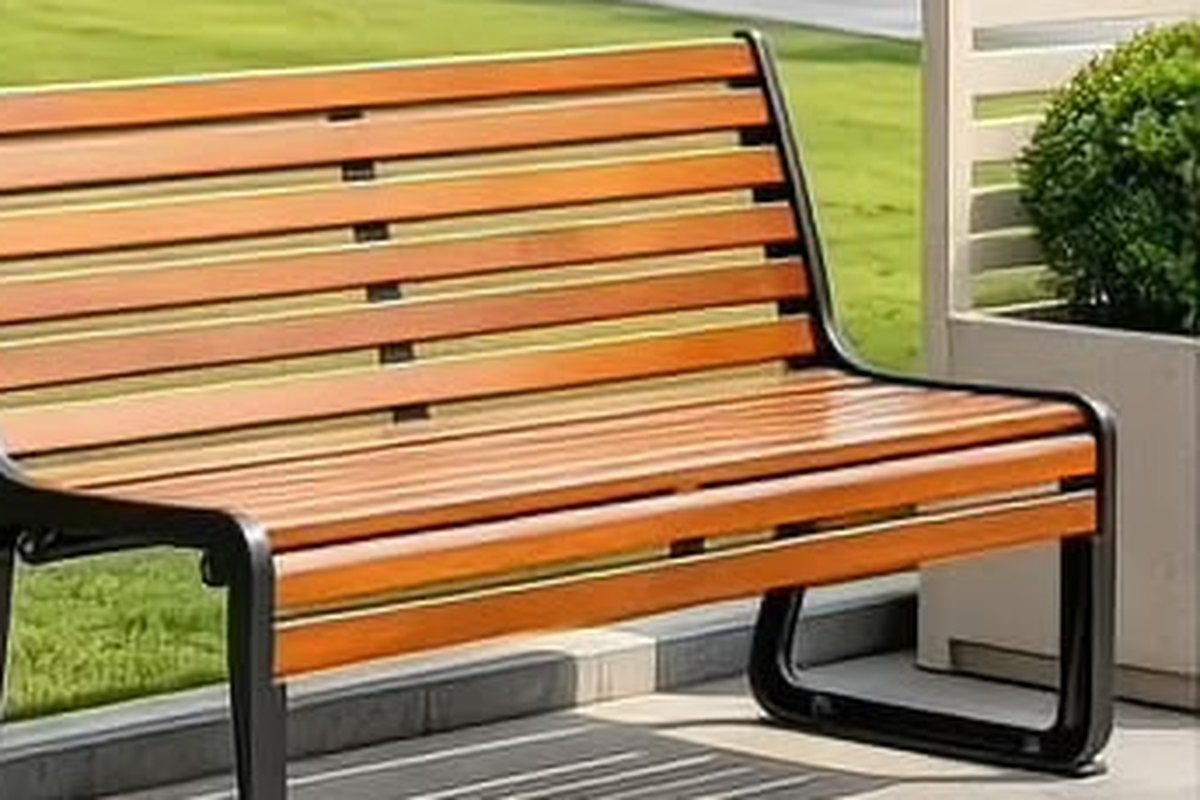
Yes — and this is where specification pays off years later. Benches built with modular slat fixing (each slat individually screwed to the frame, rather than glued or hidden behind continuous profiles) let a maintenance crew swap one cracked or vandalised slat with hand tools. Keep a small stock of spare slats from the original order, in the same species and thickness, and a repair is invisible from three metres away.
Two details make on-site replacement practical. First, specify fixings that need a matched driver bit — they survive public sites better than standard screws and still allow authorised servicing. Second, order spare slats at purchase time rather than years later; matching a weathered slat colour is far easier when replacements can weather alongside the originals. You can see this modular construction across the seating shown in our project references.
Humidity is hard on bins as well as benches — see our companion guide on choosing outdoor litter bins for a coastal park for the corrosion side of the story.
Frequently asked questions
- How long do Merbau bench slats last outdoors?
- Merbau is a dense, naturally oily hardwood, so slats that are kept clean, drained and re-coated on schedule commonly stay serviceable for many years in outdoor public settings. The actual figure depends on the local climate, whether benches sit under trees or in open sun, and how consistently the maintenance programme is followed.
- What oil should I use on Merbau bench slats?
- Use a penetrating exterior wood oil or a hardwax oil formulated for horizontal outdoor timber. These soak into the surface rather than building a film, so renewal is simple: clean, let the slats dry, lightly abrade and wipe on a fresh coat. Always test on a small area first, because oily hardwoods absorb finish more slowly than pine.
- How do I stop hardwood bench slats from turning grey?
- Greying is a surface effect caused by UV breaking down the top layer of wood fibres combined with moisture cycling. Clean the slats, sand the greyed surface back to fresh timber, and restore protection with a finish that includes UV inhibitors — then repeat the recoat before each wet season instead of waiting for the grey to return.
Specifying seating for a humid-climate programme? Tell us the site, quantity and slat finish you have in mind.
Get a quote