
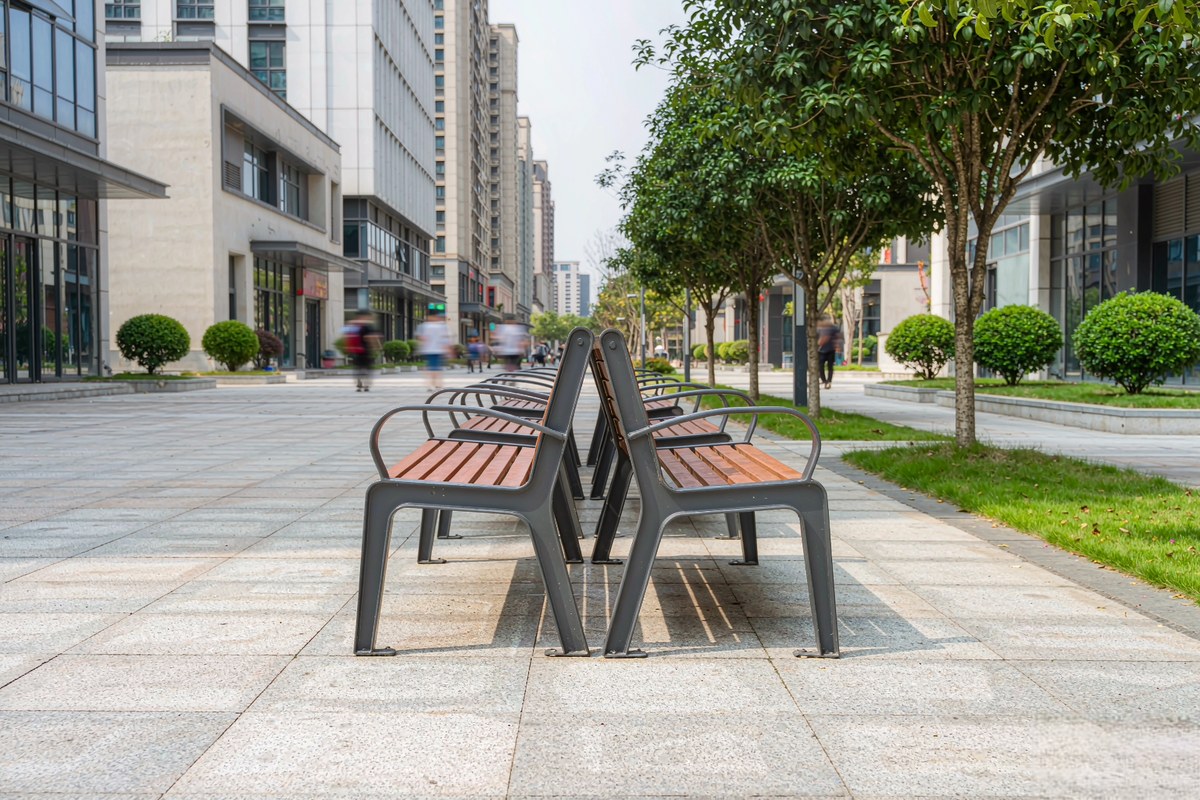
At a glance
- High-traffic plazas need benches specified for constant sitting, leaning and impact — not occasional garden use.
- Welded steel or cast-aluminium frames with hardwood or HDPE slats give the best balance of strength, comfort and repairability.
- Anti-theft expansion bolts and tamper-proof slat fasteners protect both the bench and the public.
- Cluster seating along desire lines near shade and attractions instead of spacing benches evenly.
What does "high-traffic" actually demand from a plaza bench?
A bench in a busy public plaza works far harder than one in a quiet neighbourhood park. It carries a near-continuous flow of users from morning commuters through to evening visitors, it gets used as a footrest, a skateboard ledge and a standing platform during events, and cleaning crews run brushes and ride-on machines past it daily. A specification that would be generous for a garden path can look worn within a single season in this environment.
In practice this means three things. First, the frame must be structurally heavier than domestic furniture — think welded steel sections of 2.5 mm and above or cast-aluminium legs, because thin-wall tubing flexes, rattles and eventually cracks at the welds. Second, every wearing part should be replaceable: slats, armrests and fixings, so maintenance crews repair rather than replace. Third, surfaces must cope with cleaning chemicals and chewing gum removal, which rules out soft coatings that mark permanently.
Plazas also concentrate other street furniture around seating. A bench that sits beside a pair of outdoor litter bins and an ash column serves more people and keeps litter under control, so it is worth planning these as one package rather than ordering items separately.
Which frame and slat materials survive heavy public use?
Frame choice is mostly between hot-dip galvanised or powder-coated steel and cast aluminium. Steel wins on stiffness and cost for straight runs of benches; cast aluminium wins where complex shapes are wanted and weight matters during installation. Both need outdoor-grade coating over the base metal — a zinc layer plus polyester powder paint is the common stack for steel, and cast aluminium is usually powder coated after shot blasting.
For slats, the decision is between hardwood, HDPE recycled plastic and, less often for plazas, composite boards. Hardwood such as merbau or teak feels right, can be sanded and re-oiled many times, and tolerates surface burns better than plastic. HDPE needs no oiling and shrugs off water, which suits covered or splash-prone locations, but it flexes more on long spans and can discolour under constant UV without good stabilisation. We compared these materials in detail in our bench slat material comparison.
Seat geometry matters too. For plazas, a 450 mm seat height and a slight backward tilt keep a wide range of users comfortable; we cover the ergonomics in our guide to park bench seat height. Armrests at both ends help elderly users stand up and quietly discourage skateboarding along the seat edge.
Which material combination should you specify?
The table below summarises the combinations we see specified most for demanding public squares, with the trade-offs to discuss before ordering.
| Combination | Best suited to | Watch-outs |
|---|---|---|
| Steel frame + hardwood slats | City plazas and main promenades with all-day use | Needs an annual inspection and re-oiling cycle for the timber |
| Steel frame + HDPE slats | Waterfronts, splash zones, low-maintenance budgets | Slight flex on long spans; specify closer leg centres |
| Cast aluminium + hardwood slats | Feature seating where the bench shape is part of the design | Higher unit cost; check anchor point strength on thin flanges |
| Steel frame + steel slat top | Transit hubs and rough-sleep-prone zones | Hot to touch in summer sun; less comfortable for long sitting |
How far apart should benches be in a busy plaza?
Spacing is a behavioural question as much as a dimensional one. People sit where activity is: near crossings, food outlets, play areas and shade. Spreading benches at fixed intervals across empty paving usually wastes budget, because half of them stay unused while the popular corner is oversubscribed.
A practical method is to map the plaza's desire lines during two or three visits at different times of day, then cluster benches where standing crowds already gather. Between clusters, 30 to 50 metres of walking distance between seating points is a common planning guideline for open squares, tightened wherever there is shade, a view or an attraction. Our earlier article on park bench spacing breaks the distances down by setting.
Clustering also simplifies services: one litter bin and one ash column per seating cluster is usually enough, and cleaning routes stay short.
Which installation details keep benches safe and in place?
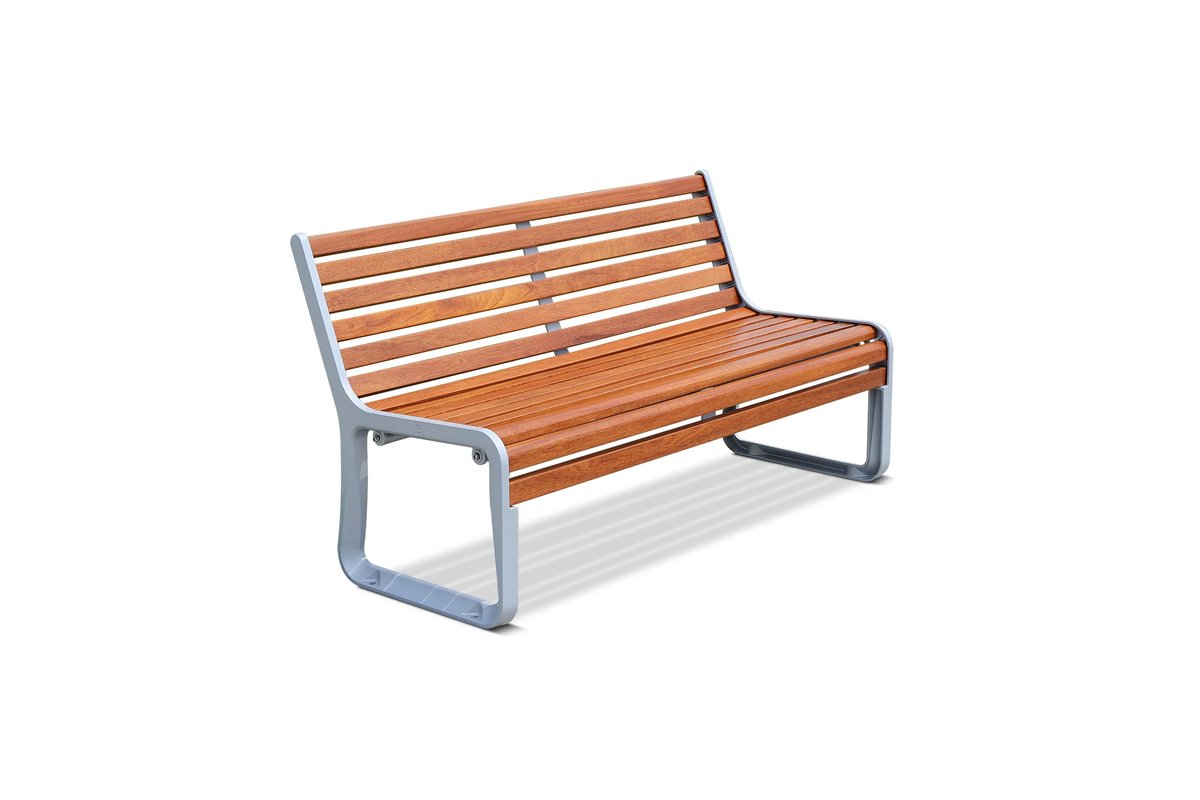
Fixing is where many plaza bench budgets are quietly wasted. Benches that are only surface-weighted move, rock and eventually become a liability claim. In a high-traffic square, specify anchoring to the paving with anti-theft expansion bolts into concrete, or cast-in anchor plates set during paving works. Slats should be held with tamper-proof driver fixings rather than standard hex bolts, which can be removed with ordinary tools in seconds.
Plan the ground detail early: drainage gaps under the frame stop standing water attacking the coating, and a 900 mm clear zone in front of the seat keeps wheelchair users and prams in the flow of movement. If the plaza uses large planters to steer crowds, benches can be positioned to back onto them, which protects the rear of the seat from trolleys and vehicles while creating a more settled seating spot.
Finally, agree a maintenance schedule before delivery: a quarterly inspection of fixings plus an annual timber re-oiling keeps a well-specified bench in service for many years. If you are planning a full furniture package for a square, our team can quote benches together with litter bins, ash columns and planters as one coordinated set — see our recent public space projects or send us your site plan for a quote.
Frequently asked questions
- Which bench material lasts longest in a public plaza?
- A combination usually performs longest: a welded steel or cast-aluminium frame with hardwood or HDPE slats. The frame carries the load and resists impact, while the slats can be replaced individually when they wear out, so the bench stays in service instead of being scrapped.
- How many benches should a public plaza have?
- A common planning starting point is one seat place per 30 to 50 square metres of usable plaza area, adjusted for how people actually move through the space. Cluster benches near entrances, shade and attractions rather than spreading them evenly, and observe desire lines before finalising positions.
- How do you stop public benches from being stolen or vandalised?
- Fix benches to the paving with anti-theft expansion bolts or concealed anchor plates, specify tamper-proof fasteners on slats, and choose materials that tolerate surface abuse, such as thicker steel sections and hardwood slats that can be sanded and refinished instead of replaced.
Need this specified for your own site? Send us the scene, quantity and finish requirements.
Get a quote