
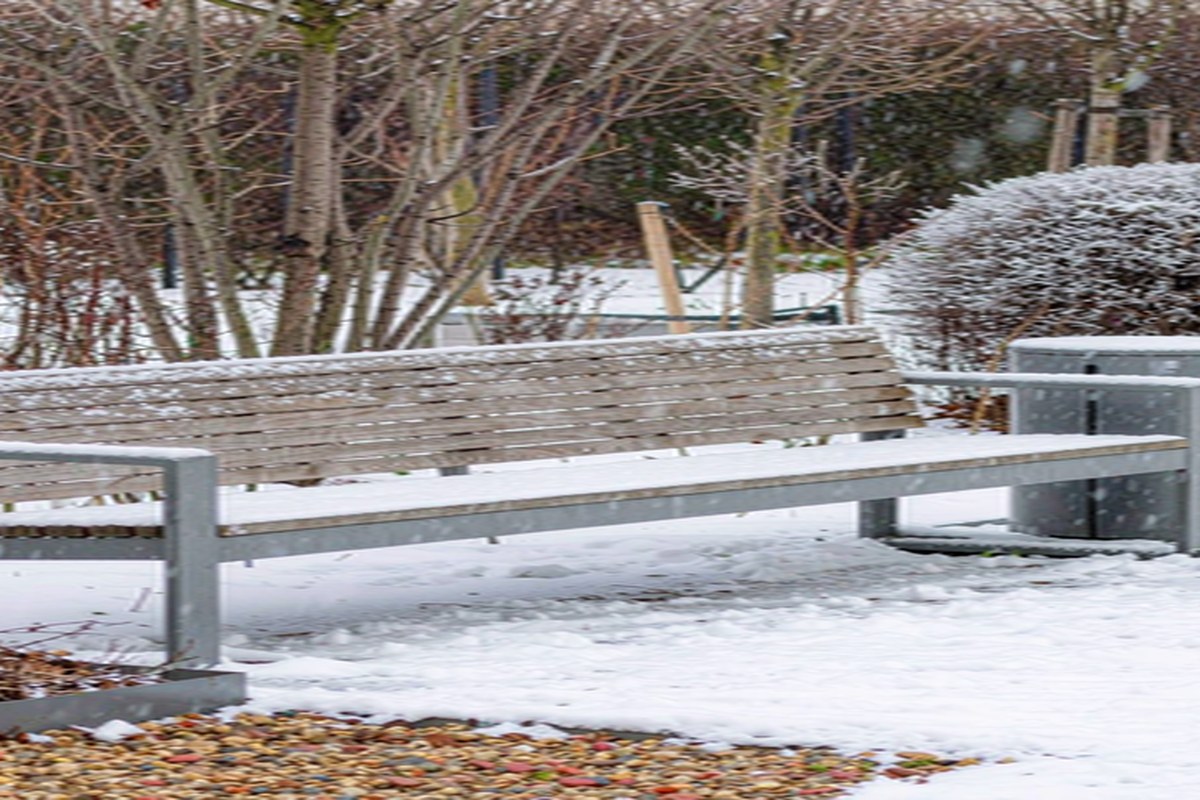
At a glance
- The real winter enemies are moisture, freeze-thaw cycles and de-icing salt — not cold air by itself.
- A short pre-winter round of cleaning, coating touch-ups and drainage checks prevents most spring repairs.
- Wood, steel and plastic-wood furniture each need a different winter emphasis; full covers often trap moisture and do more harm than good.
- The quiet season is the right time to order slats, liners and spare parts so the site is ready for spring.
Which kinds of winter damage actually matter?
Cold air alone rarely harms outdoor furniture. The damage comes from what water and salt do while temperatures swing up and down. On wooden slats, repeated freeze-thaw opens the grain and splits end grain where water has soaked in. On coated steel, meltwater sits in seams, welds and footing details for weeks, and any chip in the powder coating becomes the place where corrosion starts — the mechanism we describe in detail in our guide to preventing rust on outdoor steel furniture.
Salt is the third factor, and the most underestimated. Every de-iced path sends salt-laden slush onto bin bases, bench legs and planter walls. It accelerates corrosion on steel, leaves white residue on coatings, and dries into wood surfaces. None of this destroys a well-made unit in one season, but year after year it is the difference between a bench that needs slats at year ten and one that needs them far sooner.
Waste furniture has one more winter problem of its own: bins left open to snow collect meltwater that soaks the contents into a frozen block, which is harder to empty and harder on the shell and liner.
What should you do before the first freeze?
The highest-value winter work happens before the weather turns. A single round in late autumn covers most of it:
- Wash everything. Summer grime holds moisture against surfaces. A rinse and a brush-down costs minutes per unit and removes the film that winter moisture would otherwise lock in.
- Inspect coatings and touch up chips. Look at welds, fixings, feet and the splash zone near the ground. A matching touch-up pen or paint on exposed steel now prevents the spring rust bloom.
- Re-tighten fixings. Autumn temperature swings loosen bolted joints slightly. Tighten them before freeze-thaw works on the gaps.
- Clear every drainage hole. Bins, planter bases and seating with weep holes must drain freely, or meltwater pools and freezes — the same drainage logic we apply to planter design and to our guide on stopping waterlogging in outdoor planters.
- Empty and dry open bins. Do not let wet leaves sit in a bin through a freeze; they compact into a block that stresses the shell and the liner.
Sites with the budget to plan ahead can also agree a reduced but unbroken service schedule with their crews. The point is not fewer visits — it is that no visit gets skipped for long enough for water or waste to sit.
How does winter care differ by material?
A bench, a steel bin and a plastic-wood table do not fail in winter for the same reasons, so a single "winter cover everything" instruction serves none of them well. Match the routine to the material:
| Material | Main winter risk | What to do |
|---|---|---|
| Hardwood slats | Water uptake, end-grain splitting, freeze-thaw checking | Clean before winter; keep a water-repellent finish maintained; replace any slat already cracked so the split cannot travel |
| Powder-coated steel | Corrosion at chips, welds and the salt splash zone | Touch up chips, rinse salt residue periodically, keep fixings sealed |
| Stainless steel | Surface staining and tea-staining in salty slush | Rinse periodically; a clean passive surface resists corrosion far better than a dirty one |
| Plastic wood / HDPE | Low risk to the board itself; frame fixings and abrasion matter more | Brush off debris, check frame fixings, avoid metal shovels and ice scrapers on the surface |
The choice between these materials is worth revisiting before a replacement order — our comparison of wood, composite and aluminium bench slats sets out how each behaves over years of weather, not just the first season.
Should bins and ash columns get a different winter routine?
They should, for three practical reasons. First, they sit in the salt splash zone by definition — they stand where people clear snow and where slush collects — so their bases and lower panels deserve the closest coating inspection of anything on site. Second, they hold waste, and wet winter waste is heavy: a bin that goes a week unemptied after snowfall may hold a frozen block that crews have to break out, damaging shells and liners. Keep the emptying schedule intact through winter even when visit counts elsewhere drop, and fit outdoor bins with liners so waste never bonds to the shell.
Third, hooded and enclosed bins hold moisture differently from open tops. Wipe the interior during autumn rounds, and on stainless models follow the routine in our guide to cleaning stainless outdoor bins so the surface goes into winter clean and passive. Ash columns are the simplest of all: empty the tray before heavy snow, and confirm the rain hood still sheds water away from the opening.
How do you turn winter into a head start on spring?
The quiet season is the cheapest time of year to do work that would disrupt the site in summer. Photograph every unit during a winter walk-through and note coating damage, cracked slats and worn fixings. Order slats, touch-up paint, liners and fasteners now; replace a broken slat in February rather than queueing behind the spring rush — the process is the one we describe in our guide to replacing a park bench slat. If a coating refresh is due, schedule it for the first dry weeks of spring, not the height of the season.
Planning a new installation for next year? Winter is a good moment to compare specifications calmly. Browse our projects to see how different furniture families hold up in public settings, or send us your site plan — we will suggest materials and finishes suited to your local winter, from the park bench range through to bins, tables and planters. More seasonal and maintenance guides are collected in the case studies index.
Frequently asked questions
- How do I protect park benches and outdoor bins in winter?
- Run a short pre-winter routine: wash off summer grime, touch up damaged coatings, re-tighten fixings, and clear every drainage hole so meltwater can escape. Through winter, rinse salt residue off surfaces near de-iced paths and keep bins emptied on their normal schedule so wet waste does not freeze inside the shell.
- Should I cover outdoor benches in winter?
- Usually not. A cover that rests against the slats traps moisture and slows evaporation, which is exactly what causes staining and coating breakdown over winter. Benches fixed to the ground are built to stay out in the weather; the better move is cleaning, coating touch-ups and drainage rather than wrapping. Covers only make sense for stored items in a dry, ventilated space.
- Does de-icing salt damage outdoor furniture?
- Yes. Salt-laden slush splash onto legs and bin bases accelerates corrosion on steel and leaves white residue on coatings. It does the most harm where the coating is already chipped. Rinse splash zones regularly through winter, keep coatings intact, and position bins and benches where salt spray from clearing equipment cannot settle on them.
Specifying furniture that must survive hard winters? Tell us your climate zone.
Get a quote