
At a glance
- 304 carries more nickel and chromium than 201, which is why it resists corrosion better in humid, coastal and high-chloride environments.
- 201 is a cost-effective workhorse for dry inland sites and sheltered locations, provided the surface is kept clean and the finish is maintained.
- Grade is only half the story: surface finish, weld treatment and cleaning frequency decide how stainless steel actually ages on site.
- Ask for the material certificate at quotation stage and match the grade to the site's moisture and salt exposure, not to the lowest price.
What is the difference between 201 and 304 stainless steel?
Both grades belong to the austenitic family that dominates architectural metalwork, and at a glance they look identical. The difference lives in the alloy. 304 carries roughly 18–20% chromium and 8–10.5% nickel. 201 swaps out part of that expensive nickel for manganese and nitrogen, ending up with less nickel and marginally less chromium. Nickel is the element that stabilises the structure and does much of the work against corrosion, so that substitution has consequences outdoors: 201 gives up some corrosion resistance in exchange for a lower alloy bill, which is why it is typically quoted noticeably cheaper per kilo or per finished part.
Neither grade is exotic — they are both commodity materials with well-published composition ranges, which is exactly why a supplier can and should state the grade in writing on every quotation. The table below sums up the practical differences.
| Property | 201 | 304 | What it means on site |
|---|---|---|---|
| Chromium (typical) | 16–18% | 18–20% | The passive layer that fights corrosion |
| Nickel (typical) | 3.5–5.5% | 8–10.5% | Corrosion resistance and formability |
| Other elements | Higher manganese | Lower manganese | 201 partly substitutes nickel with manganese |
| Corrosion behaviour | Good in dry inland air | Stronger in humid, coastal air | Grade should follow moisture and salt exposure |
| Relative cost | Lower | Higher | Budget grades for sheltered sites, premium grades for exposed ones |
Does 201 stainless steel rust outdoors?
It can, under the right combination of moisture, salt and neglect. With less nickel in the alloy, 201's passive layer is easier to upset, and in coastal air, humid climates or around swimming pools and de-icing salt it may develop surface staining — the cosmetic “tea staining” you often see on street furniture rather than deep structural corrosion. The staining usually starts where water sits: crevices, weld lines, the underside of a bench rail, the base of a bin where splash dirt accumulates.
304 is more forgiving but not immune. Near breaking surf even 304 needs a maintenance routine, and a bin that never gets rinsed will eventually stain whatever grade it is. This is why our rust prevention checklist treats grade, finish and cleaning as one system rather than three separate decisions. On the opposite end, a brushed 201 bench frame on a dry inland plaza that gets a monthly wipe-down can look factory-fresh for years — the grade did not do all the work, the maintenance did.
When is 201 the right choice, and when should you pay for 304?
201 earns its place on dry inland sites: sheltered plazas, covered walkways and transit areas, campuses and residential communities away from the coast, and any project where the budget has to stretch across many units and the maintenance team is reliable. 304 is the specification for coastal promenades, pool surrounds, marina-adjacent streets, high-visibility civic projects where a stained surface is a reputational problem, and sites with long service intervals where cleaning rounds are infrequent.
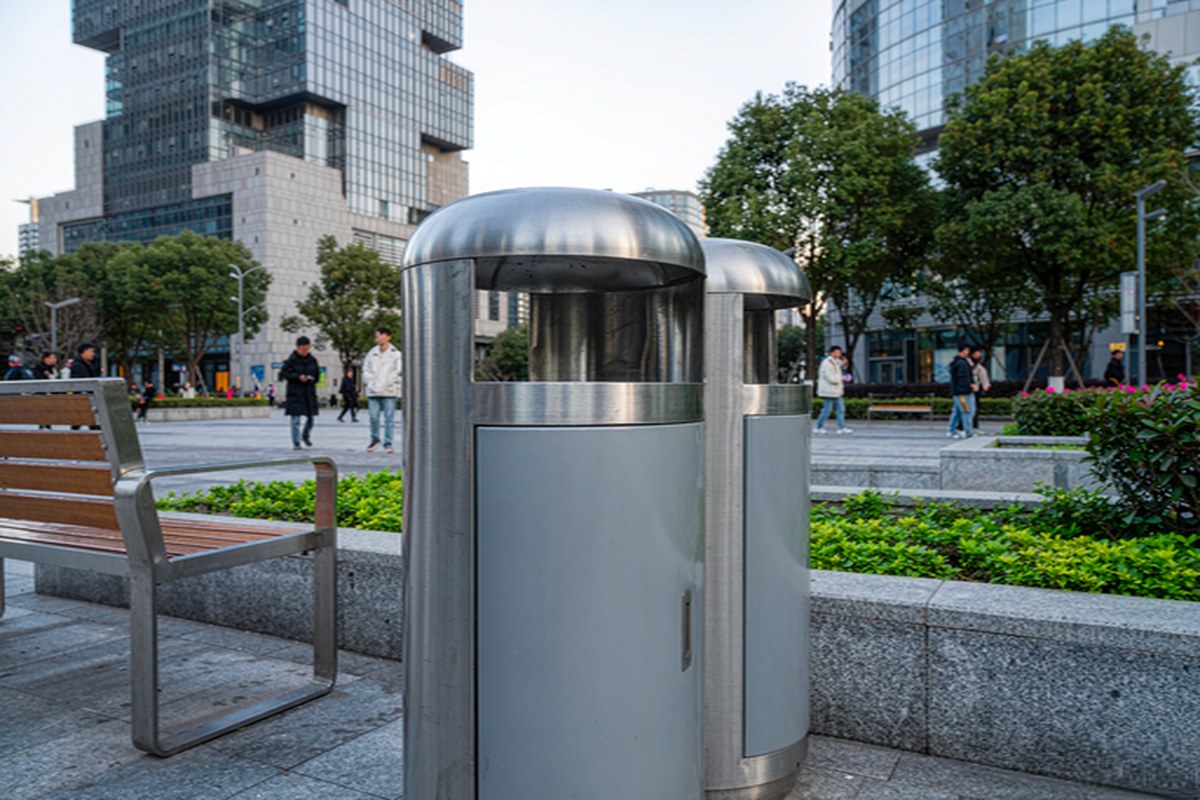
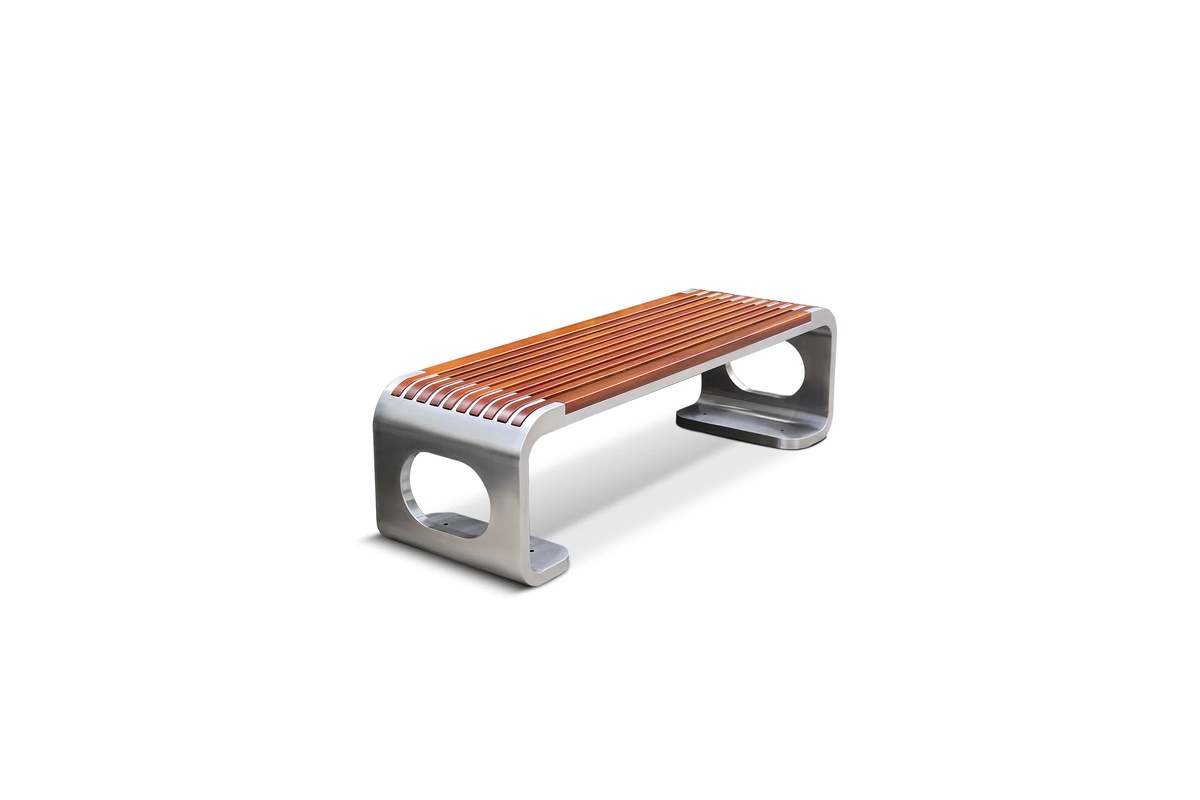
Within our own catalogue the choice is real, not theoretical: benches such as the OTD-35 and OTY-38 are built with frames available in 201 or 304 stainless steel, and bin bodies come in stainless steel or powder-coated galvanised steel — the OTM-02C receptacle offers both. Specifying the grade at quotation keeps the decision in your hands instead of leaving it to whoever packed the container. For a broader comparison of finishes, see our stainless versus powder-coated steel guide.
How do finish and maintenance change the picture?
The same grade behaves differently depending on its surface. A brushed (satin) finish with the grain running vertically sheds water and dirt far better than a mirror polish, which shows every fingerprint and drip mark, and deep scratches in a polished surface collect chlorides and start staining. Welds matter just as much: un-treated weld zones and weld spatter are the classic starting points for corrosion, so welds should be dressed and passivated before anything leaves the factory.
Maintenance is the multiplier. Routine washing with mild detergent along the grain, prompt removal of salt deposits after storms, and avoidance of harsh chloride-based cleaners will keep both grades looking their intended age. Our stainless bin cleaning guide covers the routine in detail; the same logic applies to bench frames. A well-maintained 201 can outlast a neglected 304 on appearance, even if 304 keeps a structural advantage in the most aggressive environments.
How do you confirm the grade before ordering?
Three checks keep the supply chain honest. First, ask for the grade in writing on the quotation and for a material certificate with the delivery — a mill certificate ties the actual batch to the specified composition. Second, if the project is critical or the order is large, a portable PMI (positive material identification) spot test on received goods costs little and settles any doubt within minutes. Third, price-check the logic: if one supplier's “stainless” quote comes in dramatically lower than the rest, it is usually a 201-where-you-expected-304 conversation, so make the grade line item explicit in the bid comparison. Our quotation comparison guide covers this and the other details that separate like-for-like bids. For site examples across public projects, browse our project references.
Frequently asked questions
- Which grade should I choose for outdoor bins and benches, 201 or 304?
- Use 201 for dry inland sites with regular maintenance and a tighter budget, and 304 for coastal, humid or high-visibility locations where corrosion resistance matters more than unit cost. Match the grade to the site's moisture and salt exposure rather than to the price list alone, and confirm the choice in writing at quotation stage.
- Does 201 stainless steel rust outdoors?
- It can. 201 contains less nickel than 304, so in humid, coastal or poorly maintained environments it may develop surface staining — usually cosmetic tea-staining rather than structural corrosion. Regular cleaning along the grain, dressed welds and prompt removal of salt deposits greatly reduce the risk.
- Is 304 stainless steel worth the extra cost?
- For coastal promenades, pool surrounds and sites with long service intervals, yes — the better corrosion resistance typically pays back through lower maintenance and a longer-lasting surface. For sheltered inland sites with a reliable cleaning routine, 201 can be the more economical specification.
Not sure which grade fits your site? Send us the location, environment and maintenance plan, and we will recommend the frame and body specification.
Get a quote