
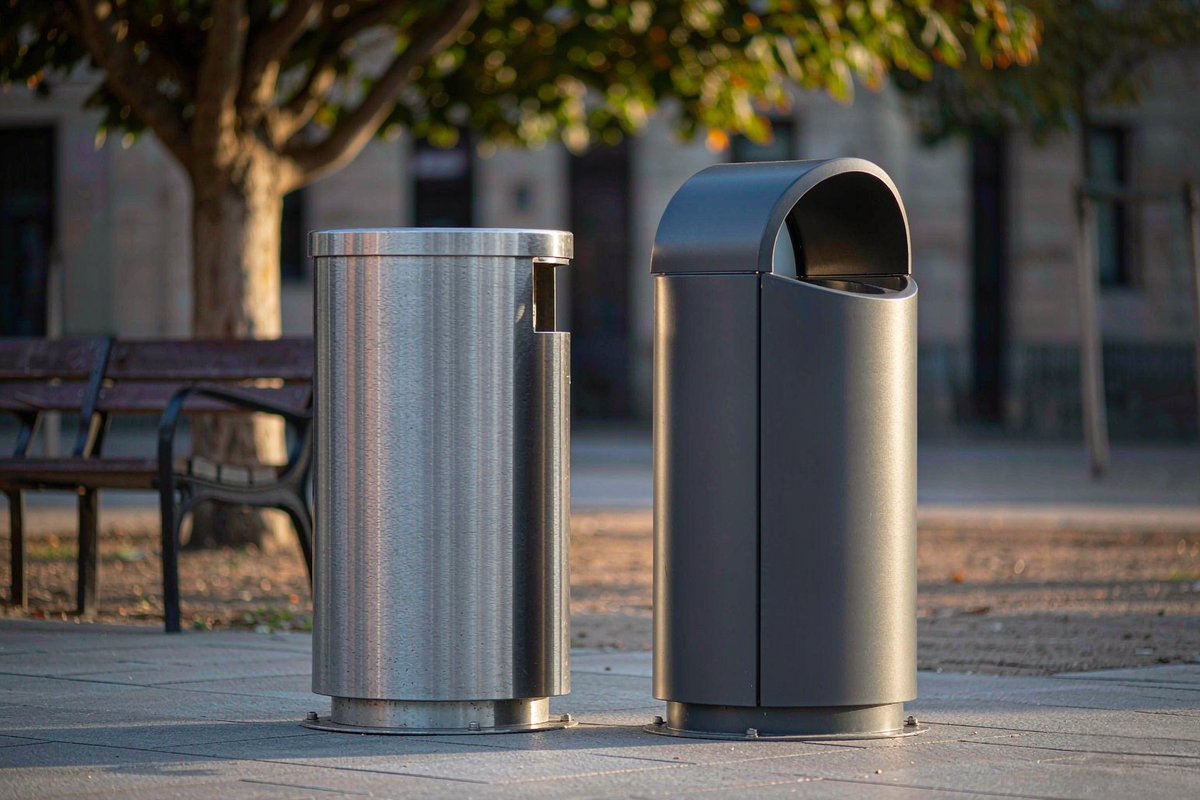
At a glance
- Stainless steel resists corrosion through its whole wall thickness; powder coating is a protective skin that can be scratched or chipped.
- 316 stainless is the safer choice within roughly a few hundred metres of salt water; 304 suits most inland sites.
- Powder-coated steel costs less, offers any RAL colour and is easier to touch up on site.
- Total cost of ownership — not the sticker price — should decide the material for a bin programme.
Which material actually resists corrosion better?
Stainless steel earns its corrosion resistance from chromium: the metal forms a thin, self-repairing oxide layer that re-passivates whenever the surface is scratched. Grade 304 handles typical urban and park conditions very well; grade 316 adds molybdenum, which is what keeps chloride-rich sea air from pitting the surface. Because the protection runs through the material, a scratch on stainless is an aesthetic issue, not the start of rust.
Powder-coated steel protects differently. The steel underneath is usually galvanised or chemically pre-treated, and the cured polyester or epoxy-polyester powder forms a barrier that keeps moisture and oxygen away from the metal. A good coating is genuinely tough — it flexes rather than flakes, and it survives daily cleaning far better than wet paint. Its weakness is any breach: a deep scratch, a stone chip, or an uncovered weld seam gives chlorides a direct path to bare steel, and corrosion then creeps under the coating.
This is why the honest answer to "which lasts longer" is location-dependent. The same outdoor litter bins range can offer both constructions, and choosing between them is mostly a question of how aggressive your site's air is.
How does powder coating fail — and how do you prevent it?
Powder coating rarely fails all at once. The typical sequence on a badly specified bin is: chalking and slight fading on sun-facing panels after a few seasons, then rust staining at cut edges and around the base where water sits, then flaking around fixings. None of this is inevitable — it is what happens when the pre-treatment was skipped, the film was too thin on edges, or the bin was never cleaned.
Three specification details decide whether a coated bin reaches old age. First, insist on a proper pre-treatment (degreasing, phosphating or a conversion layer) before coating — adhesion lives or dies here. Second, check that edges, door returns and weld seams carry full film build, because these are exactly where a coating pulls thin. Third, keep a simple washing routine: a fresh-water rinse and a soft brush a few times a year removes the salt film and grime that would otherwise sit on the surface permanently. We cover the cleaning side in more depth in our guide to choosing outdoor litter bins for a coastal park.
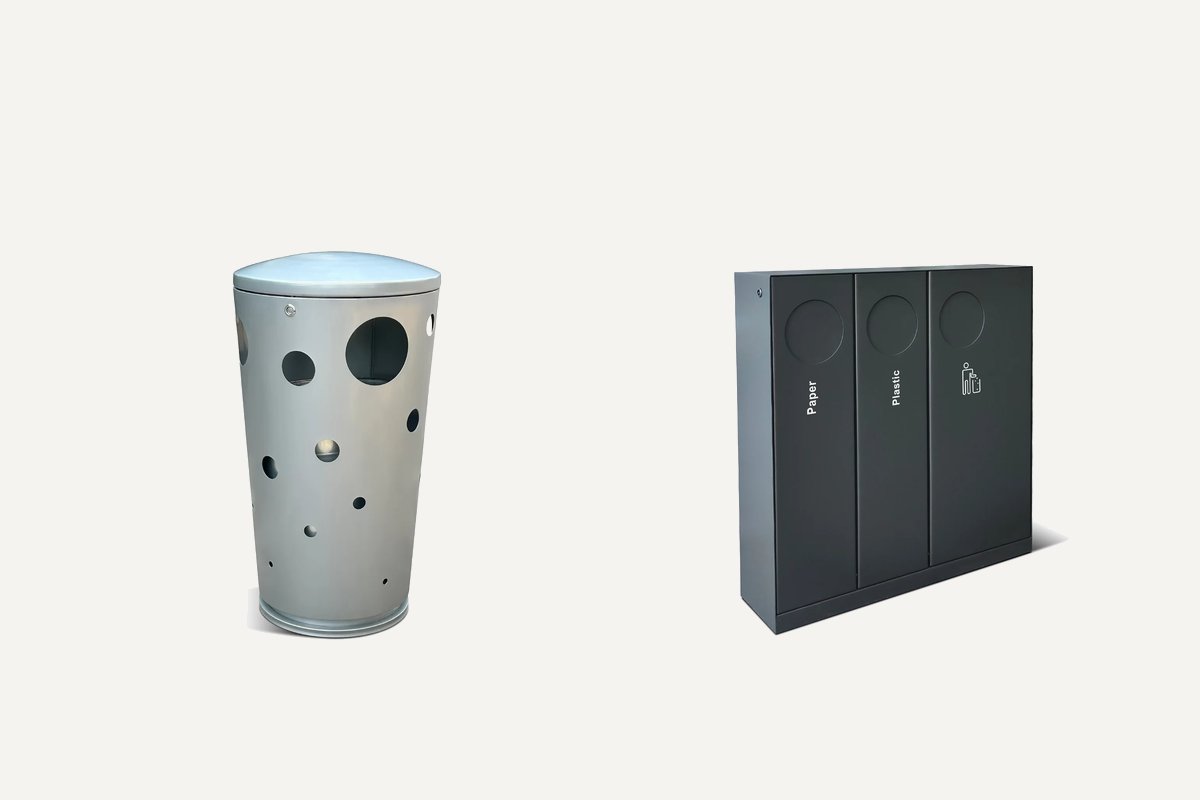
What does each option cost over its full service life?
Upfront, powder-coated steel is the more economical route: the raw steel is cheaper than stainless, and the coating line adds only a modest premium. Stainless carries a higher purchase price, especially in 316. But purchase price is only one line in the account. A coated bin that needs repainting after ten years, or replacement in a coastal site after the coating breaks down, can end up costing more per year of service than a stainless unit that needs nothing but cleaning.
| Factor | Stainless steel (304 / 316) | Powder-coated steel |
|---|---|---|
| Corrosion protection | Through-thickness, self-repairing; 316 for coastal salt air | Barrier coating on pre-treated or galvanised steel; repairable but breach-prone |
| Upfront cost | Higher, especially in 316 | Lower; colour choice at no extra cost |
| Upkeep | Occasional wipe-down; scratches do not rust | Routine washing; touch-up paint for scratches |
| Best fit | Coastal promenades, waterfronts, high-landmark sites | Inland parks, streets, campuses, residential estates |
Which bin should you choose for your site?
Start with distance to salt water. Within a few hundred metres of the shoreline, or in a coastal town where the prevailing wind carries spray inland, specify 316 stainless for bins exposed to open air, and keep hardware — hinges, locks, bolts — stainless too, because fasteners are the first place mixed-material assemblies show rust. Set slightly back from the waterline, a hybrid scheme works well: stainless along the promenade itself, powder-coated units in the streets behind, all within one visual family so the streetscape stays consistent.
For inland sites — city parks, campuses, shopping streets, residential communities — powder-coated steel is usually the smarter spend. The money saved can buy more units or better waste-stream separation, which does more for cleanliness than a material upgrade ever will. If the site has a specific brand colour or a designer finish in mind, coating is also the only way to get it. Browse how different finishes look in real installations on our projects page, or compare both materials in the wider context of our case studies and insights.
How LVEN builds both options
Hunan Lven Urban Furniture Co., Ltd. has manufactured outdoor furniture since 2012, with three production bases in Changsha, Jinhua and Foshan covering more than 20,000 m² and over 410 patents. Both stainless and powder-coated litter bin ranges are produced in-house on the same lines, which keeps apertures, locks and liner systems consistent across finishes — useful when a city programme mixes materials but wants one spare-parts inventory.
If you are weighing the two materials for a specific site, send us the location, expected footfall and any coastal exposure. We will recommend a specification and quote both options so the decision can be made on total cost. Contact our team to start that conversation.
Frequently asked questions
- Is stainless steel always better than powder-coated steel for outdoor bins?
- No. Stainless steel wins in coastal and high-chloride environments, while a well-applied powder coating on galvanised or pre-treated steel performs reliably for years in most inland parks and streetscapes at a lower cost. The right choice depends on the site's corrosion exposure, budget and appearance goals.
- How long does powder coating last on outdoor litter bins?
- On properly pre-treated steel with an outdoor-grade polyester powder, the finish typically holds its colour and barrier function for many years of normal service. Lifespan depends on UV exposure, cleaning frequency, scratches and whether edges and welds were well covered during coating.
- Can powder-coated steel bins be used near the sea?
- They can, but expect a shorter coating life than inland. For beachfront promenades we recommend 316 stainless steel, or a hybrid approach: stainless bodies in the most exposed positions and powder-coated steel set back from the waterline, with fresh-water rinsing as part of routine maintenance.
Need this specified for your own site? Send us the scene, quantity and finish requirements.
Get a quote