
At a glance
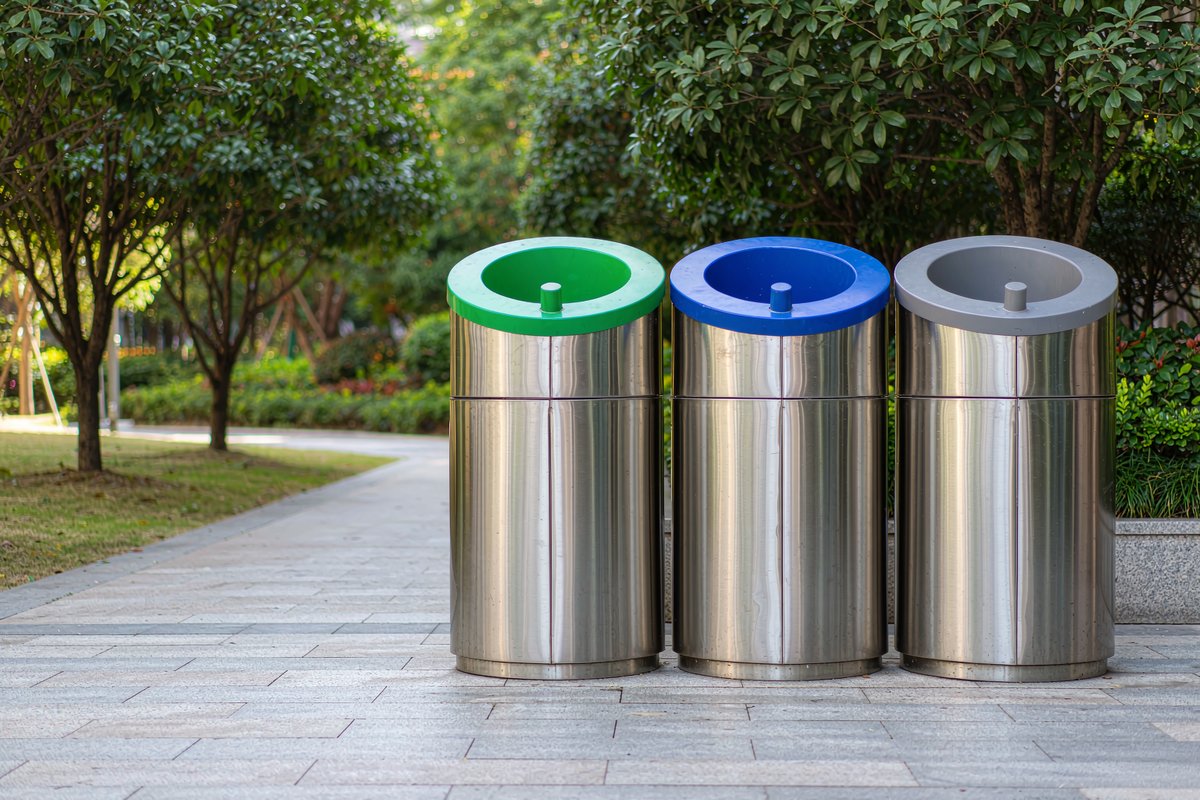
- 3 bins (recyclables / general / organics) is the practical default for parks, plazas and campuses.
- 2-bin stations fit entrances and low-footfall lawns where organic volume is small.
- 4-bin layouts suit food courts and municipalities whose collection rules require finer separation.
- Signage, lid colour and consistent placement influence sorting behaviour more than bin count does.
How many waste streams does your site actually need?
The honest answer starts behind the scenes, not on the plaza. Whatever streams you offer in public, your waste contractor must collect them separately — a beautifully sorted recycling stream that is tipped into the same truck as general waste teaches visitors to stop trying. So the first call is to the collection side: which streams are actually picked up separately, how often, and at what contamination threshold does the contractor reject a load?
The second input is what your visitors throw away. A small neighbourhood park generates mostly drinks containers, snack wrappers and some paper — a 2-bin split of recyclables and general waste covers it honestly. Add food vendors, picnic lawns or staff canteens and organics become a real stream, which is what pushes most sites to 3 bins. Sites under a source-separation mandate, or food courts generating large volumes of a single material such as PET bottles or paper, justify a 4-bin station. When comparing outdoor litter bins and recycling bins, check that the openings and liners can actually be re-configured between stream counts, because many programmes upgrade from 2 to 3 bins as a site matures.
Which configuration fits which location?
Each option has a natural habitat. The table below summarises where 2-, 3- and 4-bin stations are typically specified, and the failure mode to design against in each case.
| Configuration | Best suited to | Watch-outs |
|---|---|---|
| 2-bin (recyclables + general) | Park entrances, small lawns, playground edges, trails without food sales | Contamination rises where food is eaten nearby but no organics stream exists |
| 3-bin (recyclables + general + organics) | Main plazas, promenades, campuses, sports grounds — the default for mixed use | Needs clearer signage; each opening must be visually distinct at a glance |
| 4-bin (finer recyclables split, or + organics) | Food courts, transit hubs, municipalities with source-separation rules | Widest footprint and slowest decisions — needs the strongest signage and layout |
Where should a waste-sorting station be placed?
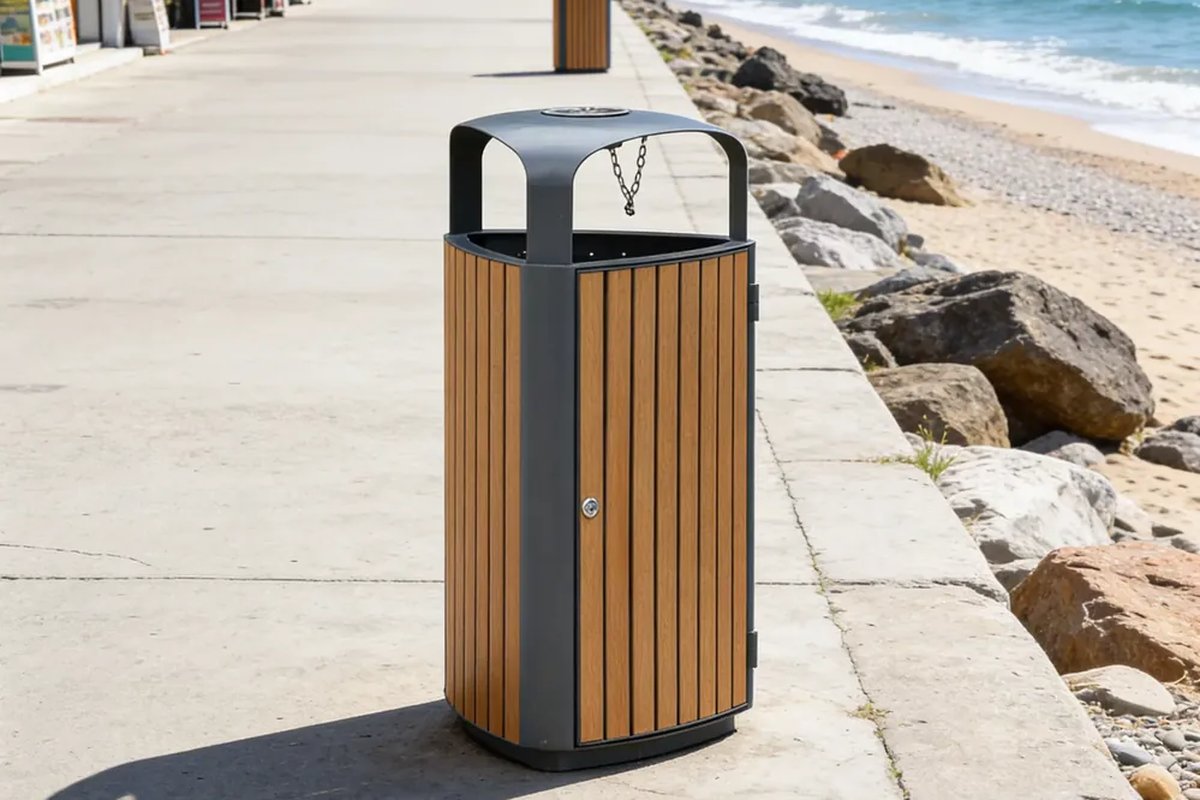
Placement decides usage more than capacity does. People rarely back-track more than a few steps to find a bin, so stations belong where waste is generated: park entrances, kiosks and food areas, seating clusters and playground edges, plus every 50–80 metres along main walking routes. Line the station up with the natural walking line — slightly set back from the flow of traffic but fully visible on approach — rather than tucked behind planting where it becomes a hidden dumping spot.
Two neighbours matter. First, seating: pair every bench cluster with a sorting station, because a seat without a bin becomes an informal picnic table. Second, smoking points: a dedicated ash column beside the station keeps butts out of the recycling stream, where they are the most common contaminant. Real programmes rarely consist of one station type alone — you can see how mixed furniture packages come together on our projects page.
What details make a sorting station easy to use?
A sorting station succeeds in about three seconds — the time a visitor takes to decide. Design for that window:
- One glance, one answer. Large, consistent icons plus words on each opening; lid colours that match local conventions everywhere on site.
- Openings shaped to the stream. Round holes suit bottles and cups; wide slots suit paper; full-width openings suit general waste. Shape itself teaches the right choice.
- Service-friendly bodies. Drained, ventilated liners, lockable access doors and anti-theft fixings keep emptying crews fast and panels on the bin.
- Materials that survive the site. Match the body material to the environment — the same salt-air logic we cover in choosing litter bins for coastal parks applies to sorting stations.
And once the furniture is in, keep the information honest: if the organics stream stops being collected separately, re-label or remove that stream. Nothing corrodes public participation faster than bins that visibly lie.
Frequently asked questions
- What are the typical bins in a 3-stream public waste-sorting station?
- The most common 3-stream configuration separates recyclables, general waste and organics (food waste and garden waste). It covers the main streams generated in parks, plazas and campuses without asking visitors to make fine-grained decisions, which keeps contamination rates manageable.
- How far apart should waste-sorting stations be placed?
- On main walking routes, place a station every 50 to 80 metres, and always at the points where waste is actually generated: entrances, food kiosks, seating clusters and playground edges. Visitors rarely back-track more than a few steps to find a bin, so distance matters more than bin size.
- Do recycling bins need to be colour-coded?
- Colour conventions differ between countries and municipalities, and some regions specify colour schemes in local guidelines. What matters most for correct sorting is consistency within one site: use the same lid colours and the same icon-and-word signage everywhere, and match the colours to whatever your waste contractor collects.
Specifying a sorting programme? Send us the site plan, stream list and collection schedule — we will propose station layouts and bin models.
Get a quote