
At a glance
- Placement decides compliance: a station where dog walkers already pass does more work than five bins in the wrong places.
- The strongest spots are decision points: path junctions, the gates of off-leash areas, and the exits people take back home.
- A station pairs a bag dispenser with a bin — bags without a bin, or a bin without bags, fail in different ways.
- Service it like any bin point: matched capacity, lockable access, and a route that includes bag stock checks.
Why do parks need dedicated dog waste bins?
Because dog waste is the one waste stream that behaves differently from everything else in a park. Tied in a knot it still smells; put in a shared litter bin it fills the bin from the top down and turns every later visit unpleasant; dropped beside a full general bin it stays exactly where it landed. A dedicated station gives walkers a place that is meant for the bag, and gives the maintenance team one compact point to service instead of half the general bins in the park.
It also works on behaviour at the moment it matters. Walkers pick up more reliably when a bag is at arm's reach and the bin is where the walk naturally pauses. The whole chain breaks if any link is missing — no bag, no bin, or a bin that is always full — and each failure looks the same from a distance: a small tied bag sitting where it should not be.
Where should dog waste bins be placed?
The working rule is decision points, not distances:
- Gates of off-leash areas. The entrance and the exit both earn a station — walkers grab a bag on the way in and need the bin on the way out.
- Path junctions and loop midpoints. Where a path splits, walkers decide; a station at the fork covers both directions without anyone reading a map.
- Where walks pause. Benches, water fountains and the edge of the open lawn are natural stopping points — place the station nearby, but not beside seating, where odour and flies undo the goodwill.
- What to avoid: inside playground safety zones, right against café or dining seating, and anywhere the collection vehicle cannot reach on its route.
Spacing by walking time beats spacing by map distance. On popular loops, a station every few minutes of walking keeps bags moving into bins; a park with one station at the gate only will show its weakness at the far end. For the general side of provision — where ordinary litter bins go and how many a site needs — see our bin count guide, and keep stations clear of play areas as set out in our playground siting rules.
What makes a good dog waste station?
The hardware brief is short: bags, bin, weather, and nothing to tamper with.
- Dispenser and bin in one unit. Bags without a bin get dropped anyway; a bin without bags goes unused. A combined station closes the loop in a single stop.
- A lockable waste compartment keeps out dogs, vermin and weather, and stops contents being scattered back onto the path.
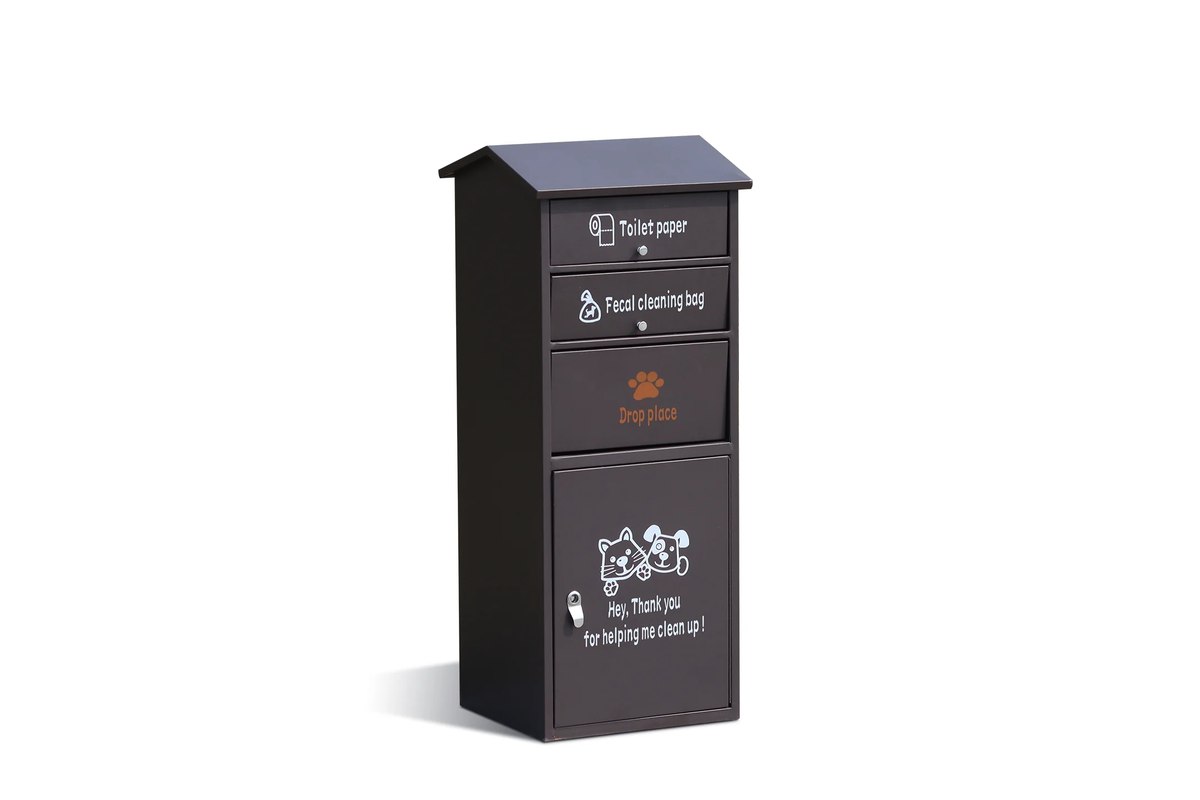
- A rainproof hood or house-shaped lid keeps the bag roll dry — a wet roll is the most common reason a dispenser looks full but yields nothing.
- Galvanised steel with a powder-coated finish, anchored to the ground like any other public furniture.
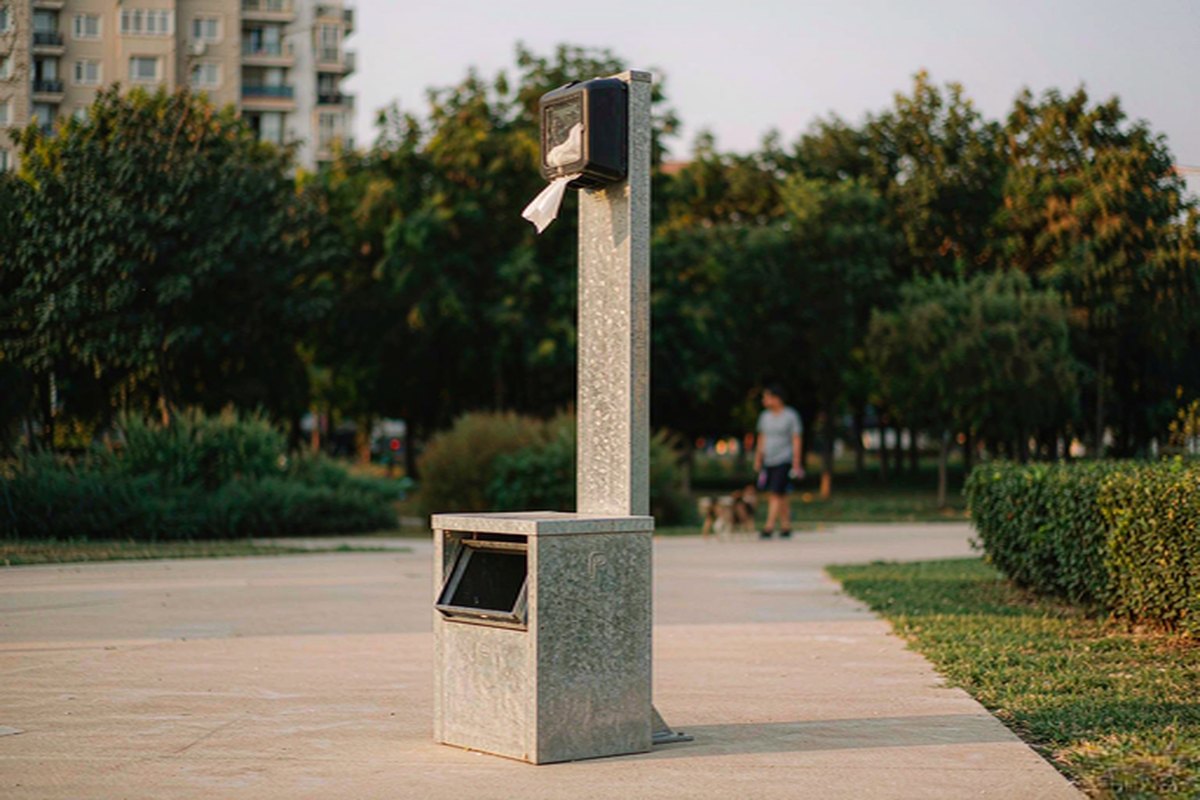
LVEN's pet waste stations follow that brief. The OTB-05 is a 24-litre unit, 34 × 30 × 90 cm, with an integrated multi-slot bag dispenser, a lockable waste compartment and a pre-drilled base for anchor bolts; the slimmer OTB-05W is a 12-litre station, 32 × 25 × 105 cm, with a house-shaped rainproof lid on a matching mounting post. Both can carry a custom logo, which is a neat place to restate the park's rules. The product options are in our dog and pet waste range.
How do you service dog waste stations?
Treat the station as a bin point on the route, not a stand-alone fixture. Match capacity to traffic — a 12-litre station suits a quiet pocket park or a secondary gate, while 24 litres carries a busy main loop between visits — and add the stations to the same route that covers the general bins, as set out in our collection route planning guide.
Two checks separate a station that works from one that gets photographed and complained about: bag stock, and the bin itself. An empty dispenser for a week teaches walkers not to trust it; a locked compartment needs a key in the crew kit; and the liner swap should take seconds, the same as any other bin. Where bags still end up in general bins, a small sign at the station — "bags go here" — resolves most of it; the sign principles are in our recycling signage guide.
If you are fitting out a pet-friendly park or residential community — stations, seating and general bins usually go in together — send us the site layout and we will match models to the walk pattern. Examples are in our projects and the case studies index.
Frequently asked questions
- Where should dog waste bins be placed in a park?
- At the points where dog walkers already pass and pause: the gates of off-leash areas, path junctions, loop midpoints and the exits people take home. Keep stations near — but not beside — benches and seating, out of playground safety zones, and where the collection route can reach them.
- How often should dog waste bins be emptied?
- Often enough that the bin never stands full, which depends on traffic and season rather than a fixed calendar. Match capacity to the busiest use, add the stations to the regular collection route, and check bag stock on the same visit — an empty dispenser for a week undoes the habit the station is meant to build.
- Do dog waste stations need bag dispensers?
- In practice, yes: picking up depends on a bag being at arm's reach at the moment of need, and a dispenser and bin in one unit closes the loop in a single stop. Choose a covered, multi-slot dispenser so the roll stays dry and visitors can pull a bag with one hand.
Fitting out a pet-friendly park or community? Send us the walk pattern and we'll match stations to it.
Get a quote