
At a glance
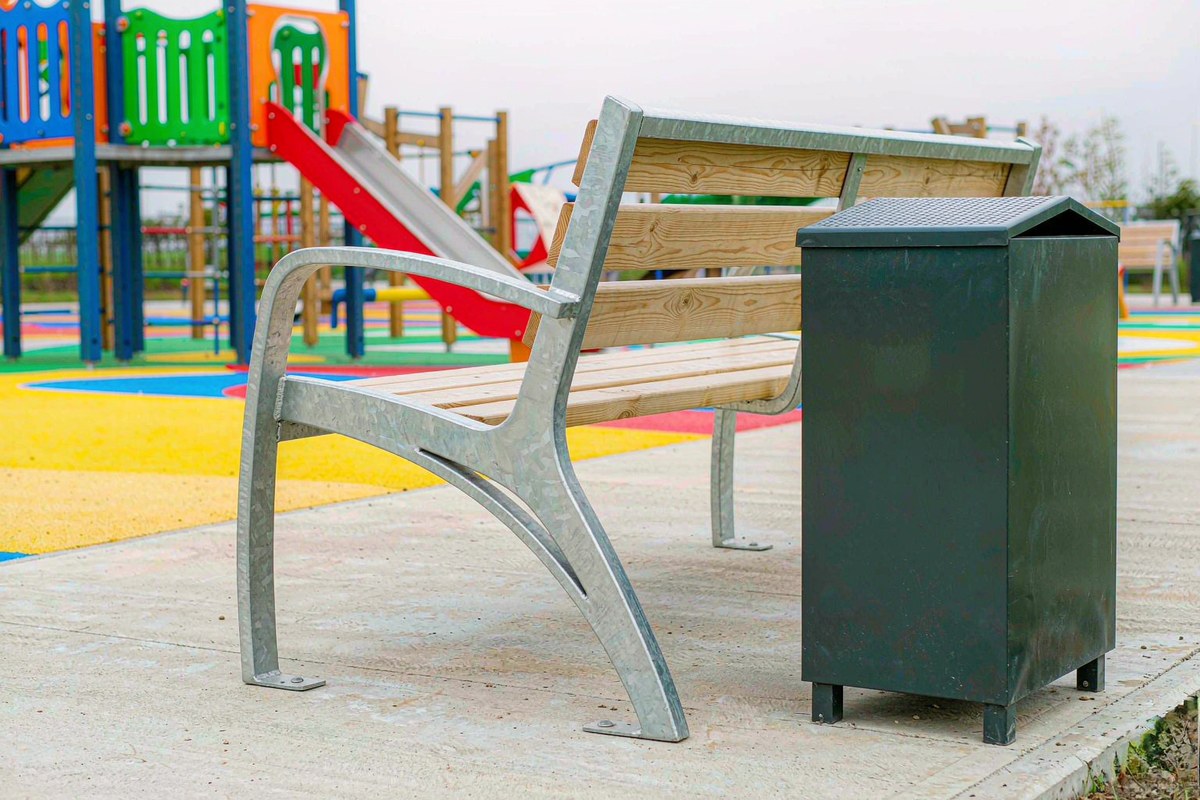
- Place benches 2-4 m from the play surfacing edge, facing the equipment - supervision is the whole point of playground seating.
- Keep benches and bins outside the fall zone marked by the impact-attenuating surfacing and out of running lines between equipment.
- Site bins at the gate, the seating node and the picnic spot - never on the play surface itself.
- Specify lidded bins, rounded slat edges and anti-tamper fixings; playground furniture takes more abuse than any other park seating.
How close should benches be to playground equipment?
Playground benches exist for supervisors, and the distance decides whether they get used. Too far and a parent splits attention between a phone on the bench and a child on the slide; too close and the seat sits inside the fall zone or in the direct path of children sprinting between units. A working range of 2-4 metres from the edge of the play surfacing covers both: an adult can stand up and reach a child within seconds, while the bench stays clear of the surfacing that marks where falls are expected.
Orientation matters as much as distance. Face the seat towards the equipment - a backrest between the sitter and the play area turns every check into a full-body twist, and twisted seats go unused. Where the playground serves both toddler and older-child zones, split the seating: one bench near the toddler units where supervision is hands-on, another 10-15 metres back for the parents of older children who need watching loosely but resent hovering. The spacing logic between seats follows the same principles as our general park bench spacing guide, and seat height for mixed audiences is covered in our article on park bench seat height.
Where should litter bins go around a playground?
Playground waste has two sources: snacks consumed on the seats, and litter carried in from outside. Both argue for the same placement - at the gate, at the seating node, and beside any picnic tables - so the bin sits where the wrapper is in hand, not where a child might climb it. A bin standing on the play surface itself fails every test: it enters the fall zone, attracts climbers, and its contents end up distributed by wind and curiosity.
Lids are non-negotiable here. An open bin beside play equipment is a wasp magnet - sweet drinks and food scraps pull insects straight towards the slides - and in windy weather it becomes a litter source instead of a sink. A lidded steel body with a removable liner keeps smells down, keeps insects out and lets crews lift waste out without dragging the bin across soft surfacing. Where dogs are common in the surrounding park, a dedicated dog waste bin near the park entrance rather than the playground gate keeps the messiest stream away from snack traffic.
What materials and fixings hold up at a playground edge?
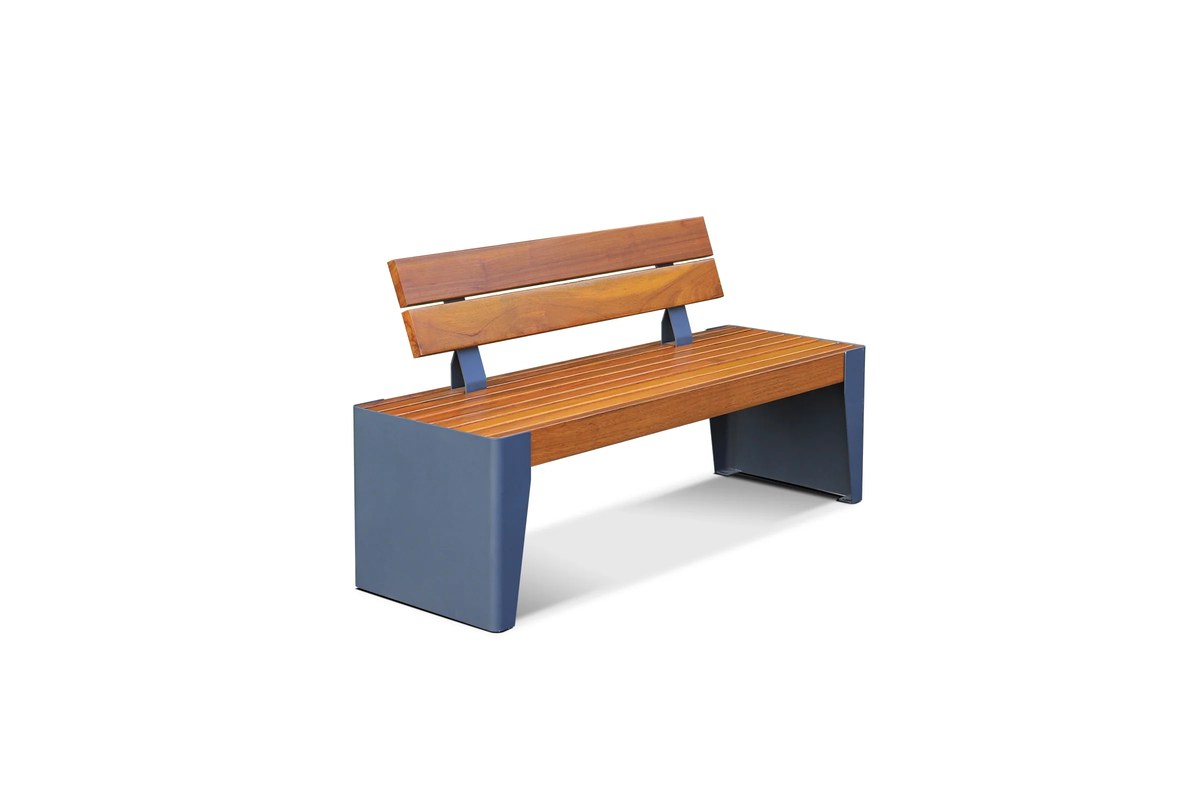
A playground edge is the harshest seat location in a park: constant hand contact, kicked mud, spilled drinks, and children who will climb anything with a horizontal surface. The material choices follow directly.
| Element | Siting rule | What to specify |
|---|---|---|
| Bench | 2-4 m off the surfacing edge, facing the equipment, clear of running lines | Hardwood or composite slats with rounded edges, steel frame, anti-tamper fixings |
| Litter bin | At the gate and seating node, never on the play surface | Lidded steel body, removable liner, washable powder-coated finish |
| Bench + bin pairing | One step apart at the seating node, so hands are free before reaching the bin | Matched family styling so the pair reads as one furniture set |
Slat material is the main decision: hardwood feels right and scuffs can be sanded out, composite shrugs off spills and crayons with zero maintenance, and the full trade-off is set out in our bench slat comparison. Whichever you choose, check the frame for horizontal surfaces a child could treat as a step, and confirm every fixing is anti-tamper - the same hardware discipline described in our guide to keeping steel furniture sound outdoors.
Which safety checks matter before you install?
Three checks prevent most problems. First, map the running lines: watch a busy session and note where children actually sprint, then keep furniture out of those corridors even if it means shifting a bench a metre off its planned position. Second, confirm sightlines - a bench placed behind planting or a wall may be comfortable but useless for supervision; trim or relocate rather than accept a blocked view. Third, check what is under the paving before coring: irrigation, lighting cable and play-equipment foundations all run near playground edges, so agree fixing positions with the site crew before drilling.
Finally, treat the playground edge as part of the park's wider furniture family. Consistent frames, slat materials and bin shapes - visible across our projects page and park bench range - make the whole space easier to maintain and easier to read. If you are planning a playground refurbishment, send us the site plan and the play-zone layout and we will return a seating and bin schedule with positions and specifications to match.
Frequently asked questions
- How far should benches be from playground equipment?
- A practical working distance is 2-4 m from the edge of the play surfacing: close enough for a parent to reach a child in seconds, far enough that the bench stays outside the fall zone and out of the path of running children. Seat the bench facing the equipment so supervision needs no turning.
- Should playground bins have lids?
- Yes. Lids keep food smells in and wasps out - an open bin beside play equipment attracts insects straight to the slides - and they stop wind-blown litter and unsupervised digging. Choose a lidded steel body with a removable liner so crews can empty without dragging the bin across the play area.
- What is the best material for benches beside a playground?
- Hardwood or composite slats on a steel frame work best: the surfaces stay usable in sun and cold, scuffs and crayon marks clean off, and edges can be rounded. Avoid sharp projections and specify anti-tamper fixings, since playground furniture receives far more climbing and abuse than ordinary park seating.
Planning a playground edge? Send us the play-zone layout and usage pattern.
Get a quote