
At a glance
- Ask every supplier for the rated static load of the exact model — and what it assumes (evenly distributed, static, on a level slab).
- Frame geometry carries the load: a triangulated or braced steel frame outperforms a taller, thinner one of the same material.
- Rocking is a load problem too: an unanchored table multiplies small movements into loose joints.
- Fixings and anti-theft hardware are part of capacity — a table is only as strong as its loosest bolt.
How much weight does a public picnic table actually carry?
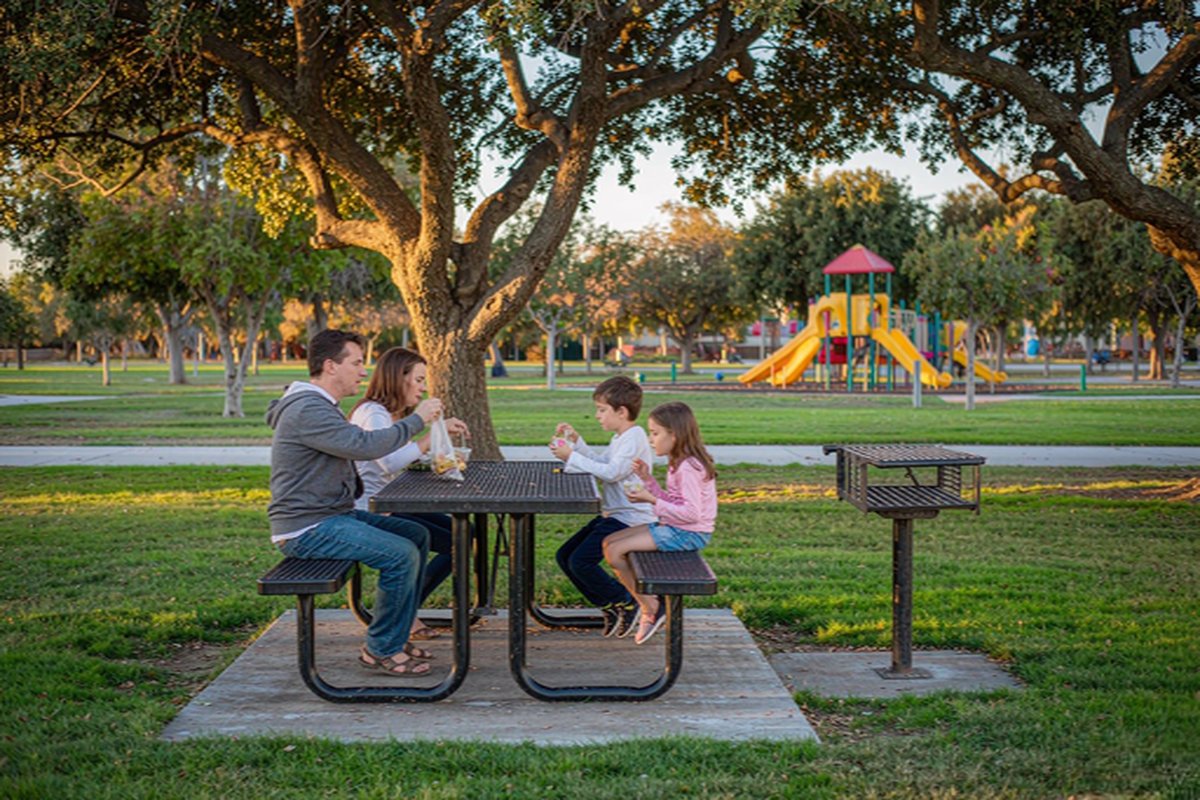
Picture the worst normal day rather than the average one. A six- or eight-seat table routinely carries several adults on each bench, food and equipment on the top, and the occasional child climbing or standing where they should not. Loads also arrive sideways — someone pushes off a bench to stand up, a group leans on the top edge during a photo. A table that is designed only for a neat, even, downward load will feel solid in the showroom and rattle within a season in a park.
That is why the useful number to request from a supplier is a rated static load for the complete table, stated with its assumptions: evenly distributed, on level ground, without point loads. Ask for it per model, not per material. Two tables in the same steel can differ enormously depending on leg spacing, brace design and top thickness. Reputable manufacturers publish or provide this on request; if a supplier cannot answer the question at all, that itself is data about how the table was designed.
Which materials and frame designs hold up best?
There is no universal winner — each material carries load in a different way:
| Construction | Strength profile | Best fit |
|---|---|---|
| Steel frame + perforated steel top | Highest stiffness per section; welds and bolted joints keep the frame rigid; top resists fire and vandalism | High-traffic parks, roadside stops, unsheltered sites |
| Steel frame + wood or composite slats | Frame carries the load, slats carry people comfortably; slats are individually replaceable | Plazas, campus and community settings, shade sites |
| All-timber frame | Works at larger sections, but joints work loose faster outdoors and members check over time | Natural settings with lighter duty and active maintenance |
| Aluminium frame | Light and corrosion-resistant; needs a heavier section to match steel stiffness | Coastal sites, roofs and decks where weight matters |
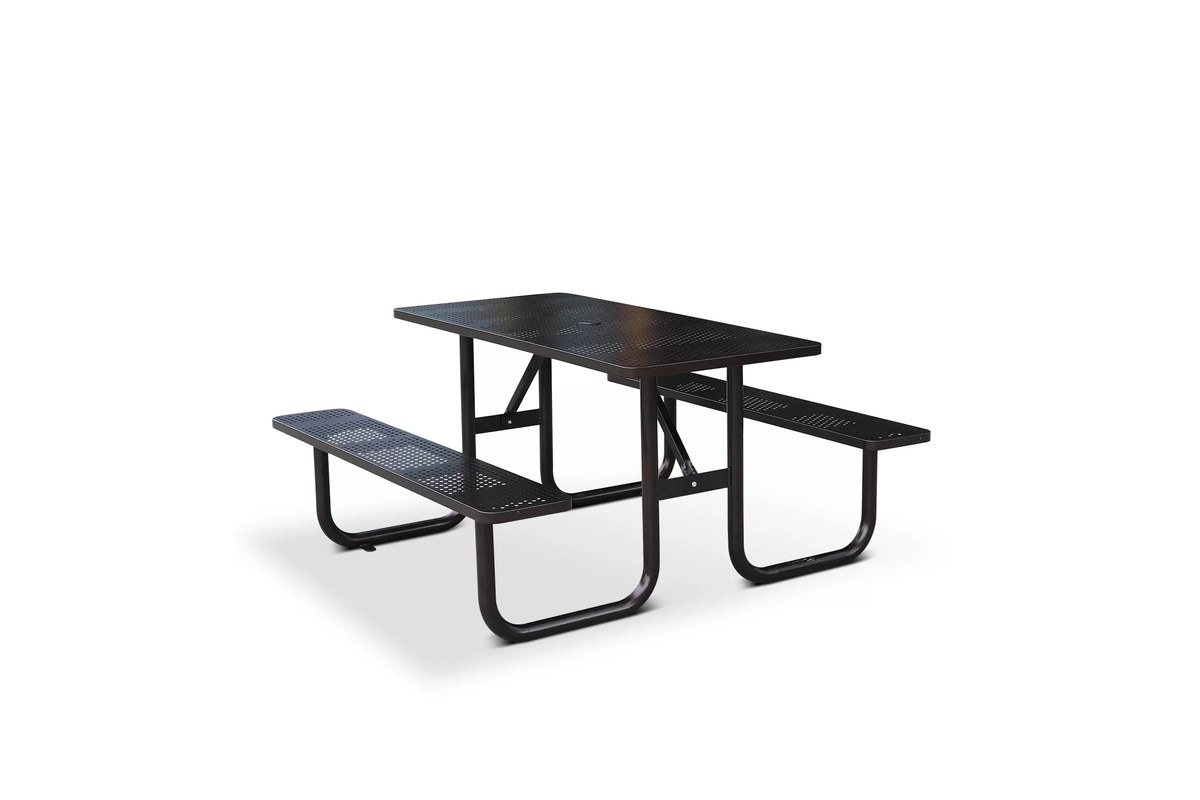
Geometry matters more than the material name. Look for a frame with triangulated bracing between legs and top rails, benches supported on their own legs or brackets rather than cantilevered from fasteners, and a top supported close to its ends. Our own picnic tables follow this pattern — welded steel frames with either perforated tops or replaceable slats — for exactly the reason that the frame, not the top surface, decides how a table ages.
Why does an outdoor table rock — and how do you stop it?
Rocking looks minor but is a load problem. Each wobble lets the frame micro-move at its joints; over months, that movement loosens bolts, works slats against their screws and opens a gap at every connection where water sits. The causes are usually one of three: uneven ground, flexing joints, or feet that were never fixed down.
The fixes follow the causes. Level and compact the base, or pour a simple pad — most public tables are installed on concrete for exactly this reason, as we describe in the guide to anchoring park benches, which applies identically to table feet. Prefer frames with welded or fully bolted structural joints rather than hardware-store fasteners into thin plate. And anchor the table: surface-mounted anchor bolts on an existing slab, in-ground fixing on soil. An anchored table also cannot be tipped over or walked off with — pair it with anti-theft fixings and the whole unit stays where you installed it.
What should you check before ordering tables for a site?
A short checklist covers most public projects:
- Rated static load for the exact model, with its stated assumptions.
- Joint type: welded or through-bolted structural joints, not self-tapping screws into thin gauge.
- Bench support: dedicated legs or steel brackets, so seated load does not hang off the top rails.
- Fixings: tamper-resistant hardware, and base plates pre-drilled for anchors.
- Top material matched to exposure — perforated steel where fire or vandalism is a concern, slats where comfort matters; the trade-offs run parallel to those in bench slat materials.
Capacity also interacts with layout. Tables need clearances for wheelchair access and service routes, and a table crammed against a path takes more side-loads from passing traffic — the same siting logic we cover in laying out a picnic area with tables and bins and in accessible outdoor furniture design.
How do you keep load capacity honest over the years?
Capacity is a condition, not a certificate. Add the table to the maintenance round: re-torque fixings after the first weeks and annually after that, check anchors, and replace damaged slats before they shift load onto their neighbours. Where a table shows persistent rocking that re-levelling does not cure, treat it as a frame issue and take it out of service — a table is cheap compared with the claim that follows a collapse. For replacement parts and refurbishment planning, see our guide to spare parts and refurbishment.
Planning a park, campus or riverside scheme and want tables specified against real expected use? Send us the site plan with footfall and table count, or browse our projects to see the table families in context, and the case studies index for more guides.
Frequently asked questions
- How much weight can an outdoor picnic table hold?
- It depends on the frame material, the span between supports and the fixings, so there is no single universal figure. A well-built steel-framed public picnic table comfortably carries several adults on each side, but you should ask the manufacturer for the rated static load of the specific model and treat any published number as a figure for evenly distributed, static use rather than a permit to stand on the top.
- Why does an outdoor picnic table rock, and how do you stop it?
- Rocking usually comes from uneven ground, a frame that has flexed loose at its joints, or feet that were never fixed down. Level the surface or shim at installation, choose a frame with welded or fully bolted joints rather than loose hardware, and anchor the feet - surface-mounted anchor bolts on concrete or in-ground fixing on soft ground - so the table cannot creep or tip under seated load.
- Which material makes the strongest picnic table for public parks?
- Steel frames with either perforated steel tops or slatted wood or composite tops are the usual choice for public parks, because the frame carries the load while the top resists weather and vandalism. Wood alone can span a table but needs thicker sections and more maintenance; aluminium is light and corrosion-resistant but needs a heavier section to match steel stiffness. Match the material to the site rather than picking one universal winner.
Need picnic tables specified for real public loads? Tell us the site and headcount.
Get a quote