
At a glance
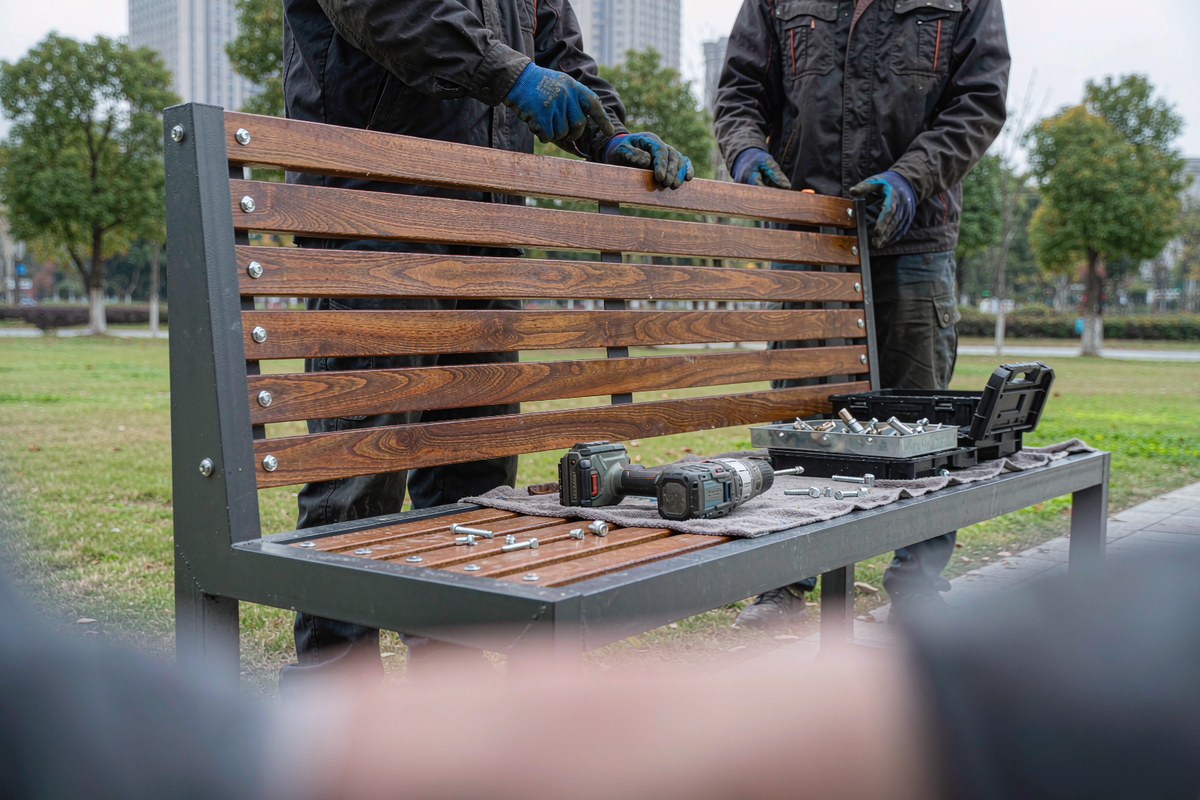
- Buy spares with the furniture: 5–10% slats, a fastener kit with its special tool, spare lids and matched touch-up paint.
- Replaceable slat construction beats welded or bonded seating for whole-of-life cost.
- Timber and coating maintenance runs on 1–2 year cycles; full refurbishment typically lands at year 5–8.
- A one-page asset register per model — parts list, tools, finish codes — prevents most procurement delays.
Why do public furniture budgets break on repairs?
The purchase price of a park bench or an outdoor litter bin is only one part of what the asset costs over a 15-year life; much of the rest is cleaning, repairs, refurbishment and eventual replacement. When that later spending is unplanned, it lands badly: a single broken slat on a prominent bench can wait months for a repair because the crew has no matching timber, no spare bolt, and no idea which factory finish code to order.
The pattern repeats across programmes of every size. Damage is concentrated and predictable — slats crack from impact or split along the grain, powder coat chips at corners, bin lids and opening rims take the most abuse, and fasteners work loose or disappear. None of this is exotic. It becomes expensive only when every incident turns into a bespoke sourcing exercise. Teams who want a structured way to evaluate suppliers on these points can start with our quotation comparison guide.
Which spare parts should be bought with the furniture?
Order spares on the same purchase order as the furniture, while tooling, finish codes and batch materials are all still active. A practical baseline for every 50 units installed:
- Slats: 5–10% spare timber or composite slats, pre-drilled to the frame pattern and finished in the same batch. Un-drilled blanks save little money and double the repair time.
- Fasteners: a sealed kit of the exact bolt types and quantities, plus one spare anti-theft driver per maintenance vehicle. A missing special tool disables an entire repair programme.
- High-abuse fittings: one or two spare bin lids or opening rims per model, and spare ashtray tops for ash columns where specified.
- Finish repair: aerosol or brush pots of touch-up coating matched to frame RAL codes, plus zinc-rich primer for galvanized frames.
Store the parts against an asset register — one page per model listing the parts breakdown, tool references and finish codes. When a manufacturer ships thousands of units to 60+ countries, as we do from three production bases, the models themselves are stable; it is the documentation that decides whether a repair takes a week or a season.
How should maintenance and refurbishment be scheduled?
Refurbishment planning works best as three nested cycles. The monthly cycle is inspection: walk the route, note damage, check a sample of bolts. The annual cycle is surface care: timber slats cleaned and re-oiled every 12–24 months depending on climate, coatings washed and touched up, drainage holes cleared — the siting rules in our playground furniture guide matter here, since sand-pit and mulch proximity accelerates wear.
The multi-year cycle is full refurbishment, commonly at year 5–8: replace all slats regardless of visible condition, degrease and re-coat frames, and renew every fastener. This is also the moment to decide per asset between refurbish, relocate or retire — a bench with a sound frame but exhausted timber is a refurbishment candidate, while a frame with crevice corrosion at every weld usually is not.
Which specification choices make refurbishment cheaper?
| Specification choice | Refurbishment impact | Cost profile |
|---|---|---|
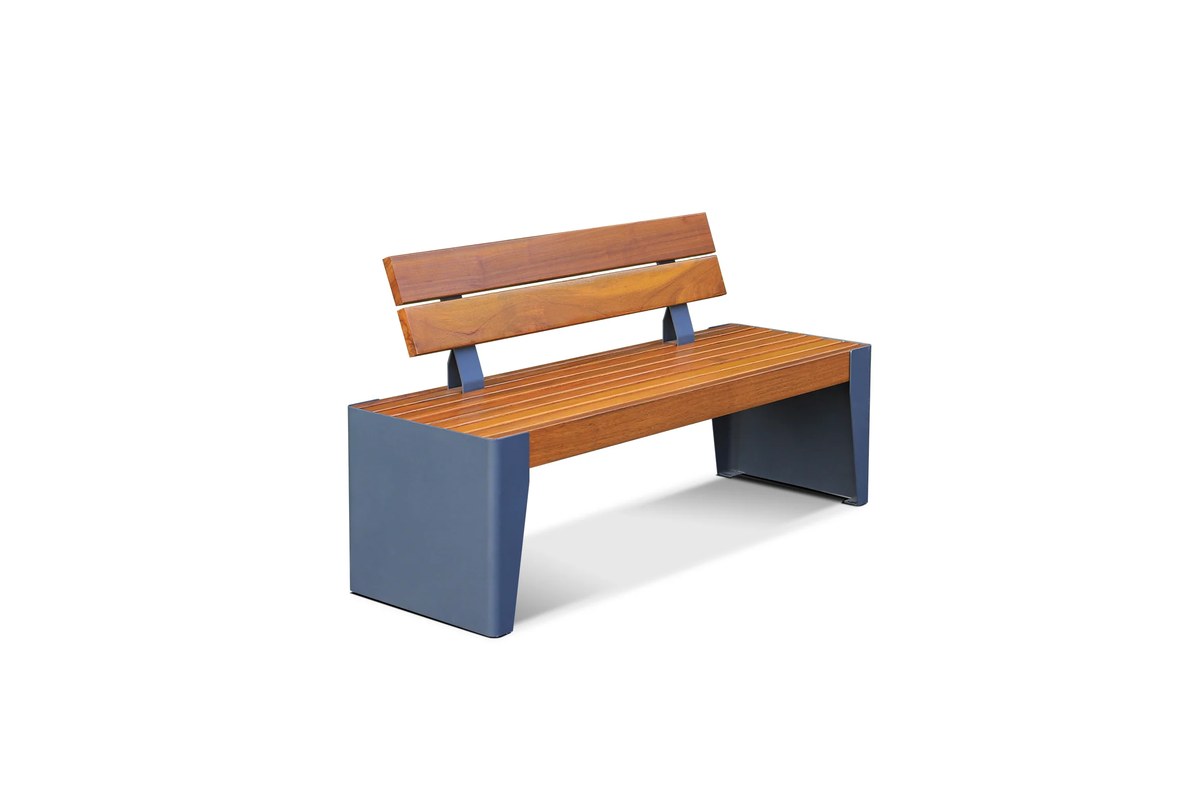
| Bolted individual slats | Single slat swapped on site in minutes | Slightly higher first cost, far lower repair cost |
| Standardised slat profile across models | One spare type covers the whole programme | Reduces stock-keeping dramatically |
| Removable bin lids / door panels | Liner and hinge work done without dismantling | Neutral to slightly higher first cost |
| Documented RAL / finish codes | Touch-up and recoat match without colour trials | Free at specification stage |
Standardisation is the quiet multiplier here. A programme that runs three bench models with three slat profiles needs three spares inventories; a programme that aligns on one or two profiles needs one. The same logic applies to fixings — mixing anti-theft bit types across a park turns every simple repair into a toolkit problem. For the material level underneath these choices, our comparison of wood, composite and aluminium slats sets out how each behaves over a maintenance cycle.
How do you phase a refurbishment programme across a city?
Large estates rarely have the budget to refurbish everything at once, and they do not need to. Rank assets on two axes — public visibility and physical condition — and refurbish the high-visibility / poor-condition quadrant first; it buys the most public confidence per unit of spending. Batch works by district so crews, scaffolding-free tools and spare parts travel once. And keep the asset register honest: after each intervention, update the parts consumed so the next year's spare-parts order reflects reality rather than the original estimate.
Manufacturers can support this more than most buyers expect. When an estate plan is shared with us — models, quantities, site photos — we quote spare-part kits and refurbishment batches against the same production lines that built the originals, which keeps finishes and profiles matched. If you are drafting such a programme, our on-site slat replacement guide is a useful training handout for maintenance crews, and the projects page shows the product families the kits would cover.
Frequently asked questions
- Which spare parts should we keep in stock for park benches and bins?
- For every 50 benches or bins installed, hold a small kit of the parts that fail first: 5-10% spare timber or composite slats pre-drilled to match the frame, a set of spare fasteners with the matching anti-theft tool, one or two spare bin lids or opening rims, and a supply of touch-up coating matched to the frame colour. These four items cover most repairs without a factory order.
- How often should public outdoor furniture be refurbished?
- Timber slats typically need cleaning and re-oiling every 12 to 24 months depending on climate and use, powder-coated steel frames benefit from a coating inspection and touch-up cycle every 1 to 2 years, and a full refurbishment — new slats, re-coated frame, replaced fixings — is commonly scheduled at the 5 to 8 year mark. High-vandalism or coastal sites shorten these intervals.
- Can damaged bench slats be replaced without replacing the whole bench?
- Yes, provided the frame was specified with individual bolted slats rather than welded or bonded seating surfaces. A single damaged slat can be swapped on site in minutes with basic tools, which is why replaceable slat construction is one of the most cost-effective choices in public bench specification.
Need this specified for your own site? Send us the scene, quantity and finish requirements.
Get a quote