
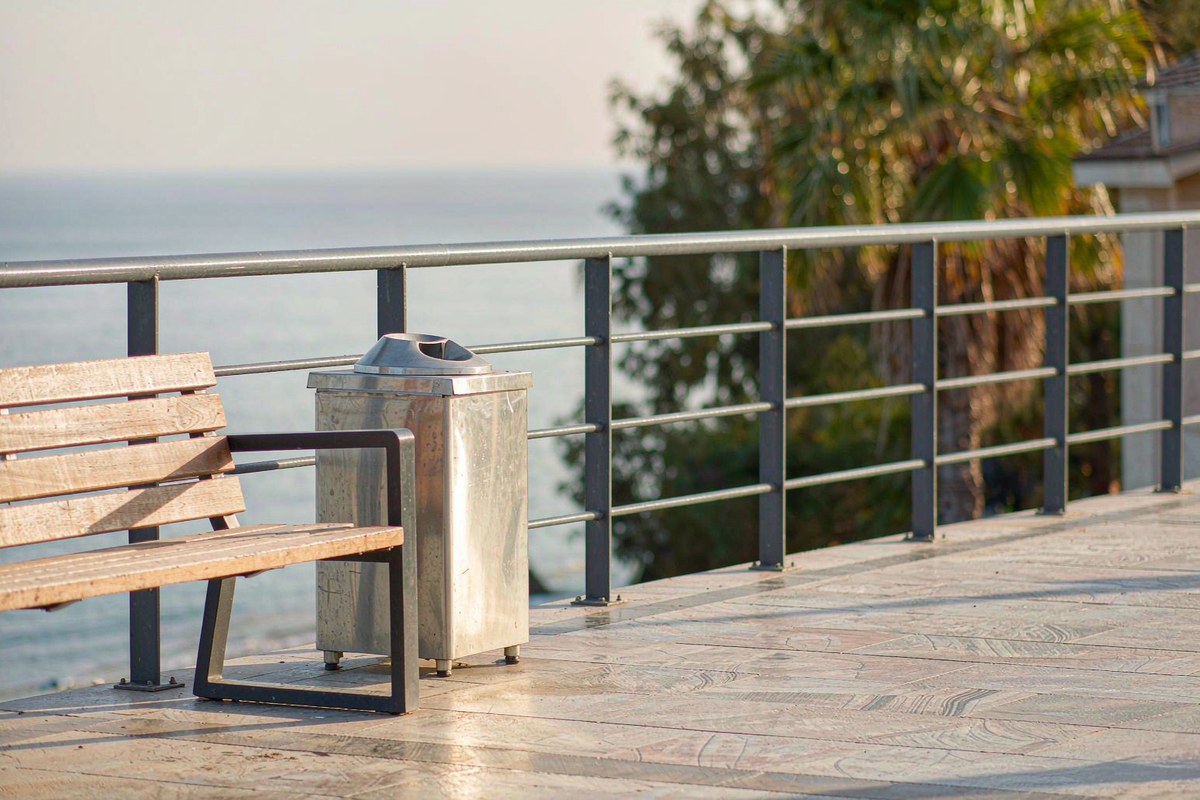
At a glance
- Salt air creeps far inland: promenade furniture corrodes from airborne chlorides, not only from direct splash.
- 316 stainless steel, hot-dip galvanized steel with outdoor powder coat, and dense hardwoods are the dependable base choices.
- Fasteners and drainage holes cause more coastal failures than the visible frame — check both first.
- A monthly fresh-water rinse costs nothing and often outperforms any coating upgrade.
Why does seaside furniture corrode faster than inland furniture?
Salt does not need liquid contact to attack metal. On a coastal promenade, wind-borne spray dries into microscopic chloride crystals that settle on every surface within roughly 300–500 metres of the shoreline. These crystals are hygroscopic — they pull moisture out of the night air — so a steel surface can stay damp with a thin, conductive salt film long after sunrise. That film is the electrolyte that drives rust.
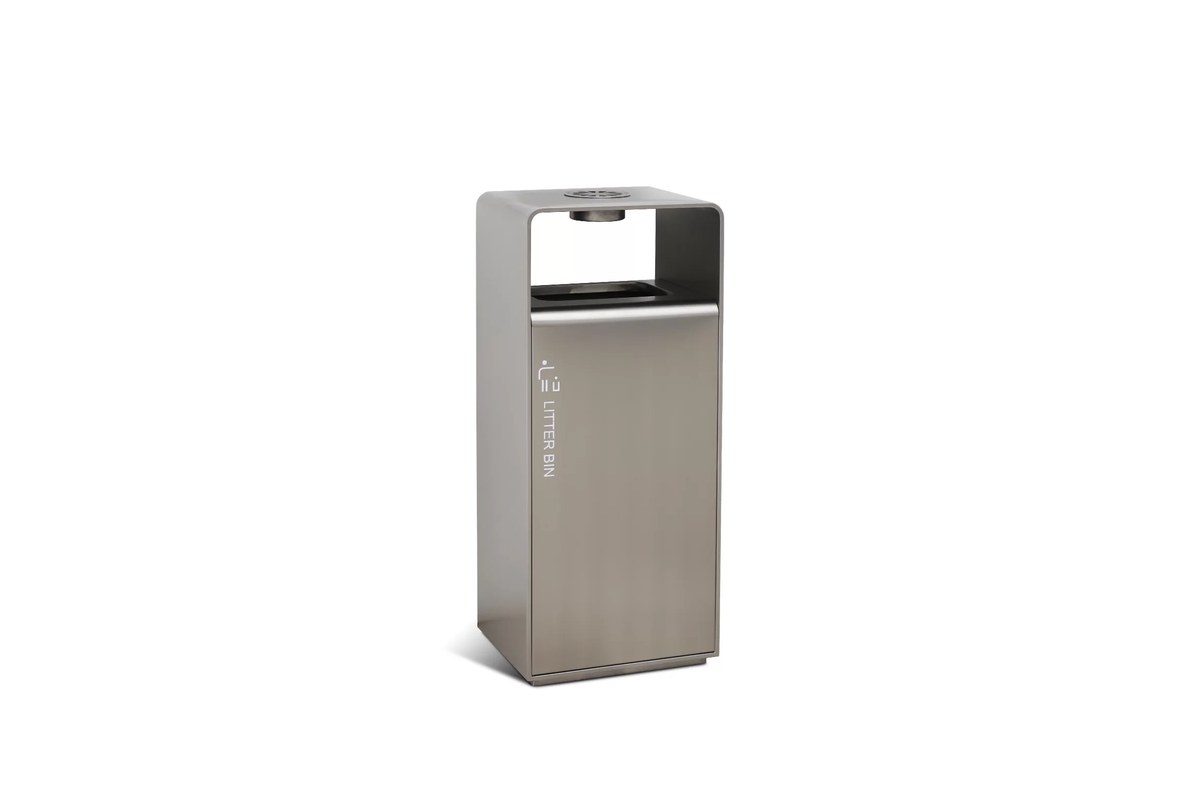
Three aggravating factors make the promenade environment harsher than the rest of the coastal zone. Sand carried by wind abrades coatings and opens pathways for chlorides. Sunlight breaks down paint binders faster on an unshaded boardwalk. And the daily tide cycle alternates between soaking and drying, which concentrates salt rather than washing it away. A budget-conscious outdoor litter bin that works perfectly in an inland park can show paint blistering at weld seams within months when copied unchanged to a sea wall.
Which materials hold up best in salt air?
Material choice decides most of the maintenance burden before a single bolt is tightened. For structures close to breaking surf, 316 stainless steel is the benchmark: its molybdenum content resists the pitting corrosion that eats 304 grades near the water. A few streets back from the beach, 304 stainless or a well-coated galvanized frame is usually sufficient and more economical.
Galvanized steel deserves special attention because it is the workhorse of public furniture. Hot-dip galvanizing gives the steel a zinc layer that corrodes sacrificially, and when it is topped with an outdoor-grade polyester powder coat it handles salt spray well — provided the coating is applied over a correctly prepared surface and all cut edges are sealed. Hardwood slats such as Merbau or teak tolerate salt well naturally, which is why park benches on promenades so often combine timber seating with coated steel frames.
Concrete and FRC planters sidestep the corrosion question entirely. And whatever the material, isolate dissimilar-metal contacts: a bare stainless bolt threaded into a galvanized part corrodes fastest at exactly the joint you cannot easily inspect.
What should a coastal rust-proofing checklist include?
Use this checklist at specification stage — every line is cheaper to fix on the drawing than on the boardwalk:
- Base material: 316 stainless within sight of surf; 304 stainless or hot-dip galvanized steel with outdoor powder coat elsewhere. Confirm the coating is specified for C5-M or at minimum C4 corrosivity class for sea-front exposure.
- Welds and edges: all weld seams ground smooth and re-coated; cut edges of galvanized parts sealed. Rust starts where coatings are thinnest.
- Fasteners: A4 (316) stainless bolts, preferably with anti-theft driver heads — see our guide to anti-theft fixings for public benches and bins. Isolate dissimilar-metal contacts with nylon washers.
- Drainage: every hollow section gets drain holes at its lowest point, and bin liners or planter shells stand on spacers so water exits instead of pooling. Trapped water inside a planter is the classic hidden failure.
- Ground contact: bolt-down base plates on galvanized or stainless plates rather than direct embedding in salty, wet sand or screed.
- Maintenance plan: fresh-water rinse monthly (fortnightly at high-exposure spots), quarterly inspection of welds and fasteners, immediate touch-up of coating damage with zinc-rich primer plus matching topcoat.
How do the common material options compare by the sea?
| Option | Coastal durability | Maintenance profile |
|---|---|---|
| 316 stainless steel | Excellent; resists pitting even near breaking surf | Rinse and wipe; occasional passivation of welds |
| Galvanized steel + powder coat | Good to very good at C4–C5-M if edges sealed | Touch up chips promptly; inspect welds quarterly |
| Hardwood slats on coated frame | Timber shrugs off salt; frame carries the risk | Oil slats seasonally; rinse and check frame fixings |
| Bare or thinly painted mild steel | Poor; expect visible rust within the first year | Not recommended for sea-front specification |
Nothing in this table requires exotic sourcing. The difference between a promenade that looks fine after five years and one that does not is almost always specification discipline, not budget. Our production background spans three manufacturing bases and a large export footprint across coastal markets. The same checklist governs how we quote sea-front projects.
How should a promenade layout be planned for low-maintenance service?
Beyond materials, placement and grouping reduce the corrosion workload. Position ash columns and bins away from the windward railing where spray concentration is highest, yet keep them within natural stopping points so they are actually used — our notes on choosing ash columns for smoking zones cover the siting logic in detail. Cluster furniture so a single rinse pass with a low-pressure washer covers bins, benches and planters together. And wherever the promenade meets a beach access ramp, expect a sand-and-salt concentration zone: specify the toughest material grade there, not the average one.
Finally, plan the inspection route the same day the furniture is installed. A twenty-minute quarterly walk with a torch and a torque check on a sample of bolts will catch most problems while they are still cosmetic. Municipal teams comparing supplier offers can use our quotation comparison guide to make coating class, steel grade and fastener specification an explicit line item rather than a footnote.
Frequently asked questions
- Which materials hold up best in salt air?
- For coastal promenade furniture, 316-grade stainless steel, hot-dip galvanized steel with an outdoor polyester powder coat, and naturally dense hardwoods such as Merbau or teak are the most dependable choices. 304 stainless steel also performs well a few hundred metres from the shoreline, but closer to breaking surf the added molybdenum in 316 gives it an edge against pitting corrosion.
- How do you protect steel outdoor furniture from salt air?
- Combine four layers of defence: a corrosion-resistant base material or hot-dip galvanizing, a UV-stable outdoor powder coat applied to a properly prepared surface, sealed or covered fasteners, and drainage holes so water cannot pool inside hollow sections. Rinse surfaces with fresh water on a regular schedule and touch up coating damage promptly.
- How often should coastal street furniture be inspected and cleaned?
- In most coastal locations a monthly fresh-water rinse and a quarterly inspection are enough for general areas. Furniture that sits within sight of breaking waves, or near a beach access point where sand and salt spray accumulate, benefits from a rinse every one to two weeks and a coating touch-up check each quarter.
Need this specified for your own site? Send us the scene, quantity and finish requirements.
Get a quote